

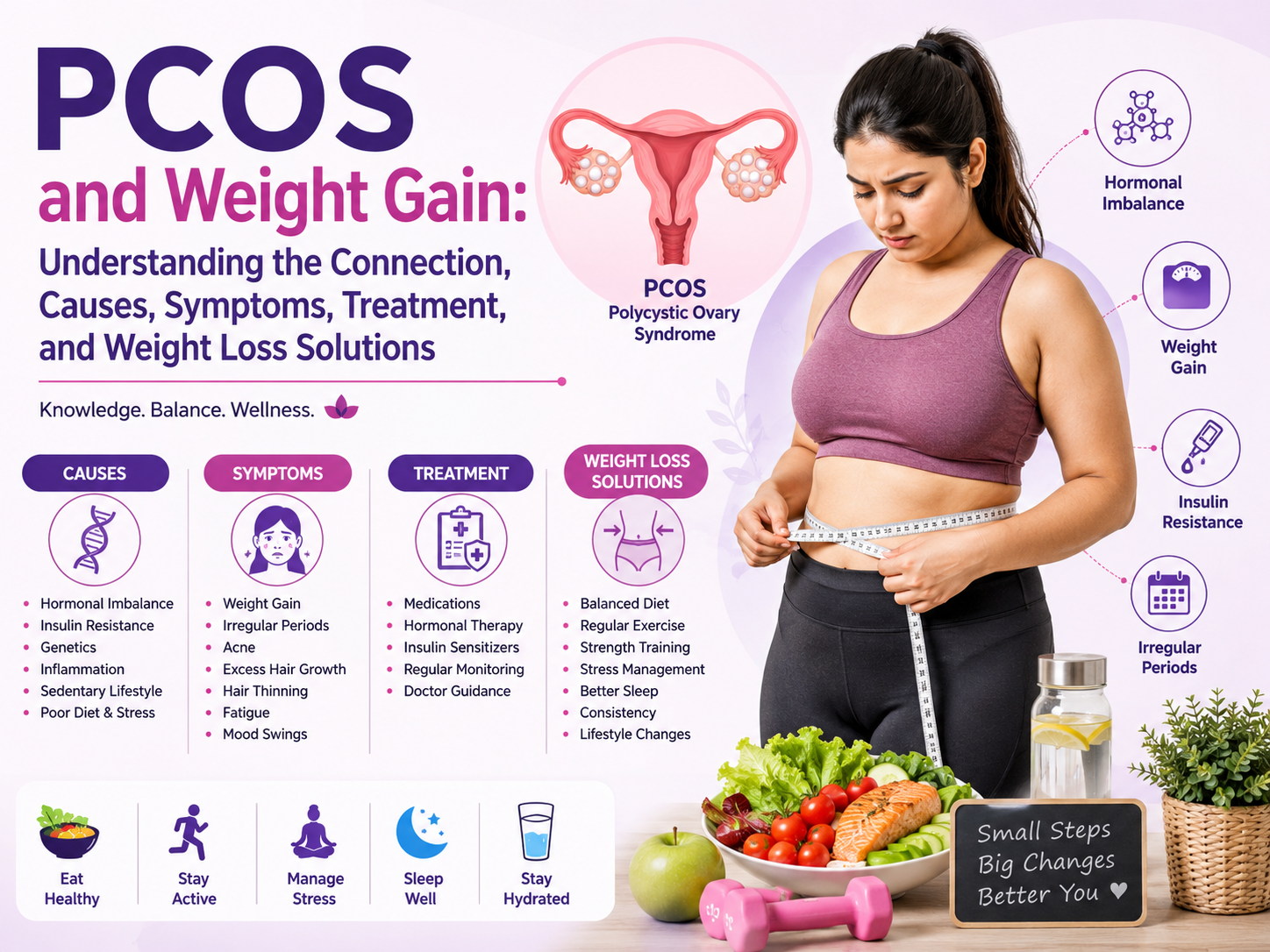
PCOS and Weight Gain: Understanding the Connection, Causes, Symptoms, Treatment, and Weight Loss Solutions
Introduction
Polycystic Ovary Syndrome (PCOS) is one of the most common hormonal disorders affecting women of reproductive age. It is estimated that millions of women worldwide struggle with PCOS, yet many remain undiagnosed for years.
One of the most frustrating challenges associated with PCOS is unexplained weight gain and difficulty losing weight despite following diet and exercise plans. Many women find themselves caught in a cycle of hormonal imbalance, insulin resistance, food cravings, and metabolic changes that make weight management significantly more difficult.
Beyond physical appearance, PCOS-related weight gain can affect fertility, menstrual health, self-confidence, emotional well-being, and long-term health outcomes.
In this article, you will learn:
- What PCOS is
- Why weight gain occurs in PCOS
- Signs and symptoms
- The role of insulin resistance
- Health risks associated with obesity and PCOS
- Effective weight loss strategies
- Medical treatment options
- Homeopathic approaches
- Lifestyle modifications for long-term success
What is PCOS?
Polycystic Ovary Syndrome (PCOS) is a complex hormonal and metabolic disorder affecting women during their reproductive years.
It is characterized by:
- Irregular ovulation
- Hormonal imbalance
- Elevated androgen (male hormone) levels
- Multiple immature follicles in the ovaries
Prevalence of PCOS
PCOS affects approximately 8–13% of women worldwide and is becoming increasingly common in India due to lifestyle changes, stress, obesity, and sedentary habits.
Hormonal Changes in PCOS
Women with PCOS often experience:
- Increased androgen levels
- Elevated insulin levels
- Disturbed ovarian function
- Irregular menstrual cycles
- Metabolic abnormalities
Common Myths About PCOS
Myth: Every woman with PCOS has ovarian cysts.
Fact: Not all women with PCOS develop cysts.
Myth: Only overweight women get PCOS.
Fact: Lean women can also have PCOS.
Myth: PCOS causes infertility in all women.
Fact: Many women with PCOS conceive naturally or with treatment.
Why Does PCOS Cause Weight Gain?
Weight gain in PCOS is not simply due to overeating. Multiple biological mechanisms contribute to increased body weight.
1. Insulin Resistance
Insulin resistance is one of the primary causes of weight gain in PCOS.
When cells become resistant to insulin:
- Blood sugar regulation becomes impaired
- The body produces more insulin
- Excess insulin promotes fat storage
2. Elevated Insulin Levels
High insulin levels stimulate fat accumulation, especially around:
- Abdomen
- Waistline
- Hips
This creates a vicious cycle where increasing body fat further worsens insulin resistance.
3. Hormonal Imbalance
Hormonal fluctuations can affect:
- Appetite
- Metabolism
- Fat distribution
- Energy utilization
4. Androgen Excess
Elevated androgens can:
- Promote abdominal obesity
- Increase insulin resistance
- Reduce muscle mass
5. Chronic Inflammation
Many women with PCOS have low-grade chronic inflammation that contributes to:
- Weight gain
- Metabolic dysfunction
- Increased cardiovascular risk
6. Metabolic Dysfunction
Women with PCOS often have a slower metabolic rate and reduced calorie-burning efficiency.
7. Cravings and Appetite Dysregulation
Insulin fluctuations may trigger:
- Sugar cravings
- Hunger spikes
- Emotional eating
- Increased calorie intake
Signs and Symptoms of PCOS
Common symptoms include:
Menstrual Symptoms
- Irregular periods
- Missed periods
- Heavy menstrual bleeding
Weight-Related Symptoms
- Weight gain
- Difficulty losing weight
- Increased abdominal fat
Skin and Hair Changes
- Acne
- Oily skin
- Hair fall
- Female pattern hair loss
- Excess facial and body hair (Hirsutism)
Metabolic Symptoms
- Fatigue
- Sugar cravings
- Dark skin patches (Acanthosis Nigricans)
Reproductive Symptoms
- Difficulty conceiving
- Infertility
- Irregular ovulation
Emotional Symptoms
- Anxiety
- Depression
- Mood swings
- Low self-esteem
Understanding Insulin Resistance in PCOS
What is Insulin Resistance?
Insulin is a hormone that helps glucose enter cells for energy production.
In insulin resistance:
- Cells respond poorly to insulin
- Blood sugar rises
- The pancreas produces more insulin
How Does It Cause Weight Gain?
Excess insulin:
- Promotes fat storage
- Blocks fat burning
- Increases hunger
The body becomes more efficient at storing calories and less efficient at using them.
Long-Term Implications
If untreated, insulin resistance may lead to:
- Type 2 Diabetes
- Fatty Liver Disease
- Metabolic Syndrome
- Cardiovascular Disease
Health Risks Associated with PCOS and Obesity
Women with both PCOS and obesity face increased risk of:
Type 2 Diabetes
Persistent insulin resistance significantly raises diabetes risk.
Metabolic Syndrome
Characterized by:
- High blood pressure
- Elevated blood sugar
- Increased waist circumference
- Abnormal cholesterol levels
Hypertension
Excess body weight increases cardiovascular strain.
High Cholesterol
PCOS often affects lipid metabolism.
Heart Disease
Long-term metabolic dysfunction increases cardiovascular risk.
Sleep Apnea
Common in overweight women with PCOS.
Infertility
Ovulation problems can make conception difficult.
Pregnancy Complications
Including:
- Gestational diabetes
- Pregnancy-induced hypertension
- Pre-eclampsia
Can Weight Loss Improve PCOS?
The answer is yes.
Even a modest weight loss of 5–10% can produce significant improvements.
Benefits Include
Improved Menstrual Cycles
Ovulation often becomes more regular.
Better Fertility
Many women experience improved chances of conception.
Reduced Androgen Levels
This may improve:
- Acne
- Facial hair
- Hair fall
Improved Insulin Sensitivity
Blood sugar control improves substantially.
Better Overall Health
Weight loss can reduce long-term disease risk and improve quality of life.
Best Diet for PCOS Weight Loss
Foods to Eat
High-Protein Foods
- Eggs
- Greek yogurt
- Paneer
- Tofu
- Fish
- Chicken breast
Lean Proteins
- Lentils
- Beans
- Sprouts
Vegetables
- Spinach
- Broccoli
- Cucumber
- Bell peppers
- Cauliflower
Fruits
- Apple
- Pear
- Berries
- Guava
- Orange
Whole Grains
- Oats
- Quinoa
- Brown rice
- Millets
Healthy Fats
- Nuts
- Seeds
- Avocado
- Olive oil
Fiber-Rich Foods
- Flaxseeds
- Chia seeds
- Vegetables
- Legumes
Foods to Avoid
- Refined sugar
- Sugary beverages
- White bread
- White rice in excess
- Cakes and pastries
- Processed snacks
- Fast food
- Deep-fried foods
Sample One-Day PCOS-Friendly Meal Plan
Early Morning
Warm water with lemon and chia seeds
Breakfast
Vegetable omelet or paneer bhurji
- Oats
Mid-Morning
Apple and handful of almonds
Lunch
Grilled paneer/chicken/fish
- Mixed salad
- Millet roti
Evening Snack
Greek yogurt or sprouts chaat
Dinner
Vegetable soup
- Stir-fried vegetables
- Protein source
Bedtime
Turmeric milk (unsweetened)
Exercise and Lifestyle Strategies
Strength Training
2–4 sessions weekly can improve insulin sensitivity and metabolism.
Walking
30–45 minutes daily is highly beneficial.
Cardio Exercise
- Cycling
- Swimming
- Jogging
- Dancing
Yoga
Helpful for:
- Stress reduction
- Hormonal balance
- Flexibility
Stress Management
Practice:
- Meditation
- Deep breathing
- Mindfulness
Sleep Optimization
Aim for:
- 7–9 hours sleep daily
Poor sleep worsens insulin resistance.
Consistency Matters
Small sustainable habits produce better long-term results than crash diets.
Medical Treatment Options for PCOS
Treatment depends on symptoms and reproductive goals.
Lifestyle Modification
First-line treatment for most women.
Metformin
May improve:
- Insulin sensitivity
- Weight management
- Menstrual regularity
Oral Contraceptive Pills
Can help regulate menstrual cycles and androgen excess.
Anti-Androgen Therapy
May reduce:
- Acne
- Excess hair growth
Fertility Treatments
Including:
- Ovulation induction medications
- Assisted reproductive techniques
Monitoring and Follow-Up
Regular assessment of:
- Blood sugar
- Lipid profile
- Weight
- Hormonal status
is important.
Homeopathic Approach to PCOS and Weight Gain
Homeopathy adopts an individualized and holistic approach to health.
The goal is to address:
- Hormonal imbalance
- Menstrual irregularities
- Emotional well-being
- Constitutional tendencies
Commonly Used Homeopathic Remedies
Sepia
Often considered for:
- Hormonal disturbances
- Irregular periods
- Emotional irritability
Pulsatilla
Frequently used in:
- Delayed menstruation
- Emotional sensitivity
Calcarea Carbonica
May be considered in women with:
- Weight gain tendency
- Slow metabolism
- Fatigue
Natrum Muriaticum
Commonly selected when emotional stress is prominent.
Lachesis
May be useful in certain menstrual and hormonal disorders.
Graphites
Traditionally considered in women with obesity tendencies and menstrual irregularities.
Important Disclaimer
Homeopathic remedies should never be self-prescribed. Treatment should be individualized and prescribed only by a qualified homeopathic practitioner after detailed case evaluation.
Slim@Home and Non-Surgical Weight Loss Solutions
Modern weight-management programs may support women struggling with stubborn weight gain.
These programs may include:
Inch Loss Treatments
Designed to complement lifestyle modifications.
Body Contouring Approaches
May help improve body shape and motivation.
Diet Counseling
Personalized meal planning improves compliance.
Exercise Guidance
Structured fitness plans enhance results.
Lifestyle Coaching
Long-term behavioral changes are essential.
Realistic Expectations
No treatment can replace healthy eating and regular physical activity. Sustainable weight loss requires consistency and professional guidance.
Frequently Asked Questions (FAQs)
1. Can skinny women have PCOS?
Yes. PCOS can occur in both lean and overweight women.
2. Does every woman with PCOS gain weight?
No. Weight gain is common but not universal.
3. Is PCOS reversible?
PCOS can be effectively managed, though it is generally considered a long-term condition.
4. Which exercise is best for PCOS?
A combination of strength training, walking, and cardio is often most effective.
5. Can homeopathy help PCOS?
Homeopathy may be used as a complementary approach under qualified supervision.
6. Can losing weight improve fertility?
Yes. Even modest weight loss can improve ovulation and fertility.
7. Is insulin resistance present in all women with PCOS?
Not all, but it is extremely common.
8. Does PCOS cause hair loss?
Yes. Elevated androgen levels may contribute to hair thinning.
9. Can PCOS cause acne?
Yes. Hormonal imbalance frequently triggers acne.
10. What foods should be avoided in PCOS?
Sugary foods, refined carbohydrates, and highly processed foods.
11. Is intermittent fasting helpful in PCOS?
Some women benefit, but it should be individualized.
12. Can stress worsen PCOS?
Yes. Chronic stress may aggravate hormonal imbalance.
13. How much weight loss is needed to see improvement?
A reduction of 5–10% body weight can produce meaningful benefits.
14. Does PCOS affect pregnancy?
PCOS can increase certain pregnancy risks but many women have healthy pregnancies.
15. When should I consult a doctor?
If you experience irregular periods, infertility, unexplained weight gain, acne, or excessive hair growth.
Practical Tips for Women with PCOS
Daily Habits
- Eat balanced meals
- Stay hydrated
- Walk daily
- Prioritize sleep
Meal Planning Tips
- Include protein in every meal
- Increase fiber intake
- Avoid skipping meals
Exercise Recommendations
- Strength training 2–4 times weekly
- Walk 8,000–10,000 steps daily
Stress Management
- Meditation
- Yoga
- Journaling
- Deep breathing exercises
Long-Term Maintenance
- Set realistic goals
- Track progress
- Focus on consistency rather than perfection
Conclusion
PCOS is a complex hormonal and metabolic condition that affects millions of women worldwide. Weight gain associated with PCOS is not simply a matter of overeating—it is strongly influenced by insulin resistance, hormonal imbalance, chronic inflammation, and metabolic dysfunction.
The good news is that even modest weight loss can significantly improve symptoms, fertility, insulin sensitivity, and overall health. A combination of healthy nutrition, regular exercise, adequate sleep, stress management, and appropriate medical care offers the best long-term outcomes.
Early diagnosis and individualized treatment are essential. Whether through lifestyle modification, medical management, nutritional counseling, supportive homeopathic care, or structured weight-management programs, women with PCOS can successfully regain control of their health and improve their quality of life.
If you suspect you may have PCOS, consult a qualified healthcare professional for proper evaluation, diagnosis, and personalized treatment guidance.