
Blackheads and whiteheads treatment in Mumbai starts with knowing what these small bumps really are. Almost everyone gets them at some point, and they can linger for months. However, the right routine and a good dermatologist can clear most cases. This guide explains the causes, safe home care and clinic options. It also shows when to book a visit at a skin clinic in Borivali, Mumbai.
Quick answer: Blackheads are open clogged pores, and whiteheads are closed clogged pores. Both are types of comedonal acne. According to the American Academy of Dermatology, a retinoid such as adapalene plus a benzoyl peroxide wash helps many people, and it needs six to eight weeks to show results. If bumps remain, a dermatologist can offer prescription treatment, peels or professional extraction.
What Are Blackheads and Whiteheads?
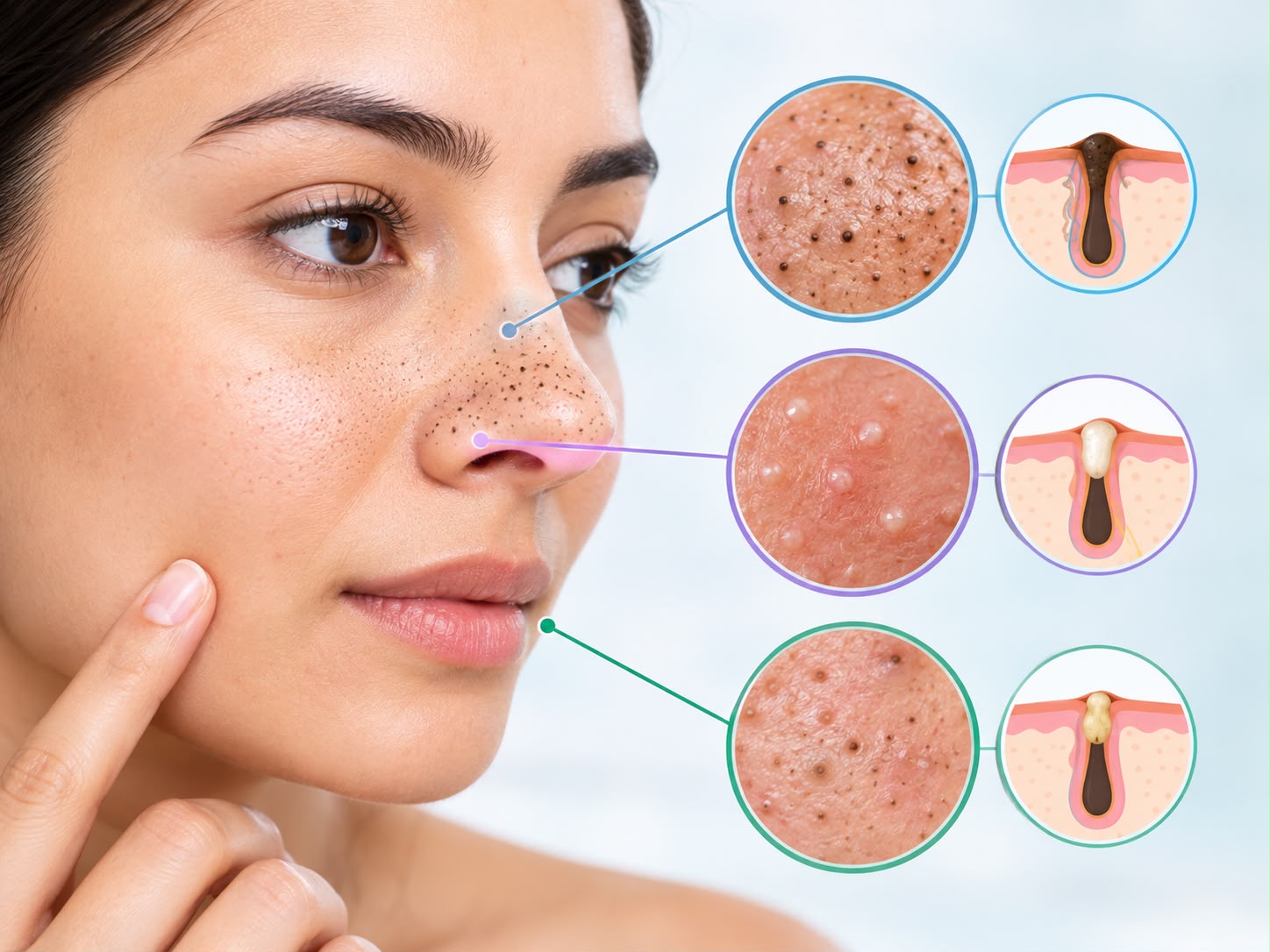
Doctors call both bumps comedones. A single bump is a comedo. Cleveland Clinic explains that blackheads are open comedones, while whiteheads are closed comedones.
In a whitehead, the pore closes over. As a result, you see a small white or skin-coloured bump. In a blackhead, the pore stays open, so the trapped material darkens after meeting air. The AAD points out that the black dot is not dirt. Therefore, scrubbing harder will not help.
These bumps often appear on the forehead and chin. They can also show up on the nose, cheeks and back. Unlike pimples, comedones are usually the same colour as your skin and are not tender, according to Cleveland Clinic.
Why Do Blackheads and Whiteheads Form on the Face?
Comedones form when a hair follicle gets plugged. Cleveland Clinic lists several contributing factors:
- Extra oil (sebum): oil glands connect to hair follicles, so more oil means a higher chance of a plug.
- Dead skin build-up: abnormal keratin and dead cells can stick together and block the pore.
- Hormones: androgen levels rise during puberty, and they can stay active in adulthood.
- Acne bacteria: these can add to inflammation inside the follicle.
Everyday habits matter too. For example, sleeping with makeup on or using heavy, pore-clogging products can make things worse, as noted in this acne care guide from Dr. Pankti’s REVIVE. In addition, many people find that Mumbai’s humidity, sweat and pollution leave their skin feeling oilier. The research on climate is limited, but a consistent routine is still sensible.
Please do not ignore stubborn comedones. Cleveland Clinic notes that untreated comedonal acne can turn into painful inflammatory acne.
Blackheads and Whiteheads Treatment at Home
Mild cases often respond to a simple routine. First, the AAD recommends a retinoid to unclog pores. It also notes that adapalene is available without a prescription. In addition, it suggests a benzoyl peroxide wash.
- Cleanse gently. Use a mild face wash and avoid harsh scrubs.
- Use a retinoid at night. Start slowly, because dryness and irritation are common early on. Ask a dermatologist if you are unsure how often to apply it.
- Choose non-comedogenic products. Moisturisers, sunscreens and makeup should be labelled as not clogging pores.
- Protect your skin from the sun. Retinoids can make skin more sensitive, so daily sunscreen is important.
- Stay patient. The AAD suggests giving treatment six to eight weeks. Similarly, Cleveland Clinic says visible change can take eight to twelve weeks, and full clearing may take months.
Mistakes That Make Blackheads and Whiteheads Worse
- Squeezing or picking: the AAD warns that squeezing can cause infection or a permanent scar.
- Scrubbing hard: the AAD advises against it, because it can worsen acne.
- DIY extraction: Cleveland Clinic says only a professional should perform extractions.
- Changing products every week: skin needs time to respond, so give each change a fair trial.
Professional Blackheads and Whiteheads Treatment in Mumbai
If home care has not worked after six to eight weeks, the AAD suggests seeing a dermatologist. Options may include comedone extraction or prescription-strength treatment. Cleveland Clinic also lists chemical peels and microdermabrasion, and it advises choosing a licensed professional.
At Dr. Pankti’s REVIVE in Borivali, the clinic explains that a plan usually combines more than one approach after a skin assessment. Its adult acne treatment guide describes options such as:
- Prescription creams and gels, including retinoids, benzoyl peroxide or salicylic acid-based products chosen for your skin type.
- Acne and oil-control peels. The clinic’s chemical peel page says many patients see improvement after three to six sessions, although this depends on the concern. You can also read about the benefits of chemical peels.
- HydraFacial deep cleansing. The clinic’s HydraFacial guide says it may help mild congestion and oiliness. It also admits that independent research on acne is limited, so it works best alongside other care.
- Professional extraction, where suitable, using sterile tools by a trained provider.
Because every skin type is different, a proper evaluation matters more than any single treatment. Moreover, early care helps prevent dark marks and scars. If you already have them, see the clinic’s guides on acne scar treatment and skin pigmentation treatment.
When Should You See a Dermatologist for Blackheads and Whiteheads?
- Your bumps have not improved after six to eight weeks of regular treatment.
- Bumps are turning red, swollen or painful.
- You notice dark marks or pitted scars after breakouts.
- Acne comes with irregular periods, hair thinning or weight changes. The clinic’s adult acne guide notes that hormonal conditions such as PCOS or thyroid imbalance can cause persistent breakouts.
- Your skin is affecting your confidence. Cleveland Clinic encourages people to seek help when acne harms self-esteem or mental health.
Prevention Tips for Blackheads and Whiteheads in Mumbai
- Wash your face after sweaty commutes and gym sessions.
- Remove makeup fully before bed.
- Keep your hands off your face, and change pillowcases regularly.
- Ask your dermatologist about a maintenance retinoid. The AAD says retinoids can help keep skin clear once acne is under control.
- Adjust your routine in the rainy season. Our monsoon skincare tips can help.
Frequently Asked Questions About Blackheads and Whiteheads Treatment
Are blackheads and whiteheads the same as pimples?
Not exactly. Comedones are usually skin-coloured and not tender, while pimples are inflamed and often red. However, comedones can become inflamed if left untreated (Cleveland Clinic).
How long does blackheads and whiteheads treatment take to work?
Most people need six to eight weeks to see change, according to the AAD. Some cases take several months.
Is it safe to squeeze blackheads and whiteheads at home?
No. Squeezing can lead to infection or scarring (AAD). Instead, let a licensed professional handle any extraction.
Can blackheads and whiteheads come back after treatment?
Yes, they can. Comedones return when pores clog again. For that reason, dermatologists often recommend maintenance care, as described by the AAD.
Where can I get blackheads and whiteheads treatment in Borivali?
Dr. Pankti’s REVIVE Multispeciality Clinic in Borivali West offers dermatologist-led acne care. The clinic also serves patients from Kandivali, Malad and Goregaon. The right plan depends on your skin, so a consultation comes first.
Book a Skin Consultation in Borivali, Mumbai
Struggling with clogged pores that will not clear? Get a personalised assessment at Dr. Pankti’s REVIVE. Our team will identify the cause and build a plan for your skin.
Disclaimer: This article is for general education and is not a substitute for personal medical advice. Results vary from person to person.