
PCOS Diet Mumbai: Why Food Choices Matter So Much
Vada pav on the way to work. Chai breaks all afternoon. A quick samosa when hunger strikes. If you’re navigating PCOS diet decisions in Mumbai, everyday food culture can feel like it’s working against you.
The good news is you don’t need to give up Indian food to eat well for PCOS. This guide explains why diet matters so much, which foods genuinely help, and practical swaps for anyone following a PCOS diet Mumbai life makes tricky.
Why Diet Plays Such a Big Role in PCOS
Many women with PCOS have some degree of insulin resistance. This means the body needs more insulin to manage blood sugar, which can worsen weight gain, cravings, and hormonal imbalance.
According to a comprehensive peer-reviewed review of nutritional approaches to PCOS, diets that stabilise blood sugar, such as low-glycaemic and fibre-rich eating patterns, are consistently linked to better insulin sensitivity and hormonal balance.
So food choices aren’t just about weight. They directly influence the hormonal picture behind PCOS symptoms.
Core Principles of a PCOS-Friendly Diet
- Include a protein source at every meal to help stabilise blood sugar
- Choose whole grains and lower-glycaemic carbohydrates over refined, processed options
- Add fibre-rich vegetables and legumes generously throughout the day
- Include healthy fats, rather than avoiding fat altogether
- Eat at consistent times, rather than skipping meals or going long stretches without eating
These are general principles, not a strict prescription. The right balance for you depends on your specific health profile, which is best discussed with a doctor or dietitian.
PCOS-Friendly Foods, the Indian Way
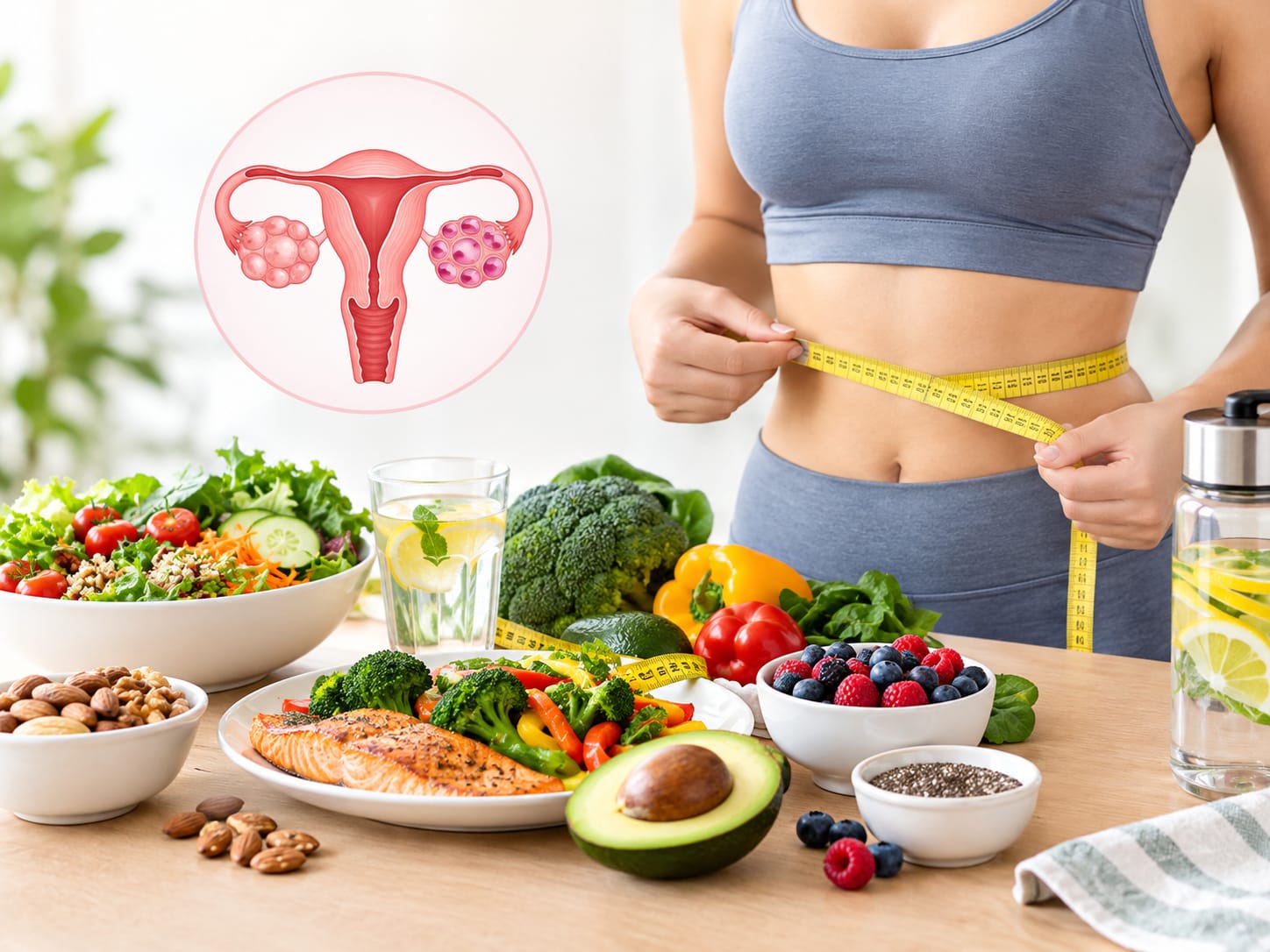
- Whole grains — jowar, bajra, ragi, brown rice, and whole wheat instead of refined flour
- Dals and legumes — moong, masoor, chana, and rajma for plant protein and fibre
- Protein-rich foods — eggs, fish, chicken, paneer, and curd
- Vegetables — generous portions of leafy greens, gourds, and seasonal vegetables
- Healthy fats — nuts, seeds, and cold-pressed oils used in moderation
- Fermented foods — curd and idli batter, which support gut health
Foods to Limit
- White rice and maida-based items in large, frequent portions
- Deep-fried snacks like samosas, pakoras, and vada pav, especially as a daily habit
- Sugary tea and coffee, particularly multiple cups throughout the day
- Sweets and mithai, especially outside of occasional celebrations
- Packaged, sugary drinks and juices
So the goal isn’t to eliminate these foods completely. It’s about frequency and portion, not total avoidance.
Quick Reference: Swap This for That
| Instead Of | Try | Why |
| White rice daily | Brown rice or millets (jowar, bajra) | Slower blood sugar rise |
| Vada pav or samosa | Roasted chana or sprouts chaat | Less refined carbs and oil |
| Sugary chai, multiple cups | Less sugar, or herbal tea between meals | Reduces added sugar intake |
| Maida-based biscuits | Roasted makhana or nuts | More fibre, less refined flour |
| Fruit juice | Whole fruit | More fibre, slower sugar absorption |
What a PCOS-Friendly Day Might Look Like
- Morning: A protein-rich breakfast, such as eggs, moong dal chilla, or paneer bhurji with vegetables
- Mid-morning: A small portion of nuts or a piece of fruit, if hungry
- Lunch: A balanced plate with dal, sabzi, a whole-grain roti or brown rice, and salad
- Evening: Roasted chana, sprouts, or a small bowl of curd instead of fried snacks
- Dinner: A lighter, earlier meal with vegetables, protein, and a smaller grain portion
This is a general pattern, not a fixed meal plan. Actual portions and choices should be tailored to your individual needs, ideally with guidance from a doctor or dietitian.
Meal Timing and Consistency
- Avoid skipping breakfast, since this can worsen insulin swings later in the day
- Space meals fairly evenly instead of going long stretches without eating
- Eat dinner earlier when possible, rather than very late at night
- Notice patterns around stress-eating or social snacking, and plan around them
Common Mistakes in Mumbai Diet Culture
- Relying on tea and coffee to skip breakfast entirely
- Treating fried street food as a daily habit rather than an occasional treat
- Underestimating hidden sugar in tea, packaged snacks, and condiments
- Following extreme diets copied from social media instead of a sustainable approach
- Eating very late due to long work or commute hours
What About Supplements?
Some supplements, like inositol and vitamin D, are commonly discussed in relation to PCOS. However, supplements should support a good diet, not replace one.
Never start a supplement for PCOS without discussing it with your doctor first, since appropriateness and any interactions depend on your individual health profile.
Related PCOS Guides
Diet is one important piece of managing PCOS, but it usually works best alongside a broader plan.
For the bigger picture on weight and PCOS, our PCOS and weight loss guide explains the hormonal connection in more depth.
If you’re also exploring hormonal support, our guide on homeopathy for PCOS explains that complementary approach.
For a structured, medically guided plan, our weight loss treatment guide covers the full range of options available at the clinic.
Common Myths About PCOS Diet
| Myth | Fact |
| You must cut out rice and roti completely. | Choosing better grain options and watching portions matters more than eliminating carbs entirely. |
| PCOS needs a completely different, expensive diet. | A PCOS-friendly diet can be built from everyday Indian foods; it doesn’t require exotic or costly ingredients. |
| Skipping meals helps with weight loss in PCOS. | Skipping meals often worsens insulin swings and cravings, making PCOS symptoms harder to manage. |
| Fasting diets work the same for everyone with PCOS. | Extended fasting isn’t universally recommended for PCOS and should be discussed with a doctor first. |
| Ghee and oil should be avoided entirely. | Healthy fats in moderation are part of a balanced PCOS diet, not something to eliminate completely. |
Frequently Asked Questions
Can I still eat rice and roti with PCOS?
Yes. Choosing whole grains, watching portions, and pairing carbs with protein and fibre matters more than cutting them out entirely.
Is intermittent fasting good for PCOS?
It works for some people, but it isn’t universally recommended and should be discussed with your doctor, especially if it leads to very long gaps without eating.
Do I need to avoid dairy completely?
Not necessarily. Some people find dairy affects their symptoms, but this varies by individual and isn’t a universal rule.
How quickly will diet changes improve my PCOS symptoms?
This varies, but many people notice changes in energy and cravings within a few weeks, with cycle-related improvements often taking longer.
Can I still enjoy festival food and celebrations?
Yes. Occasional indulgence is normal and sustainable; the focus is on everyday patterns, not perfection.
Should I see a dietitian instead of following a general guide?
A personalised plan from a dietitian or doctor is ideal, especially if you have other symptoms or health conditions alongside PCOS.
Final Thoughts
A PCOS diet Mumbai life allows for doesn’t mean giving up the food you love. It means making thoughtful swaps, eating consistently, and building meals around protein and fibre most of the time.
Book Your PCOS Consultation Today
If you’d like a personalised diet and treatment plan for PCOS, the team at Dr. Pankti’s REVIVE Multispeciality Clinics in Borivali, Mumbai can help. Visit www.drpanktisrevive.com to explore our full range of women’s health services.
Clinic: Dr. Pankti’s REVIVE Multispeciality Clinics
Location: Borivali, Mumbai, Maharashtra
Call: 9619758202