
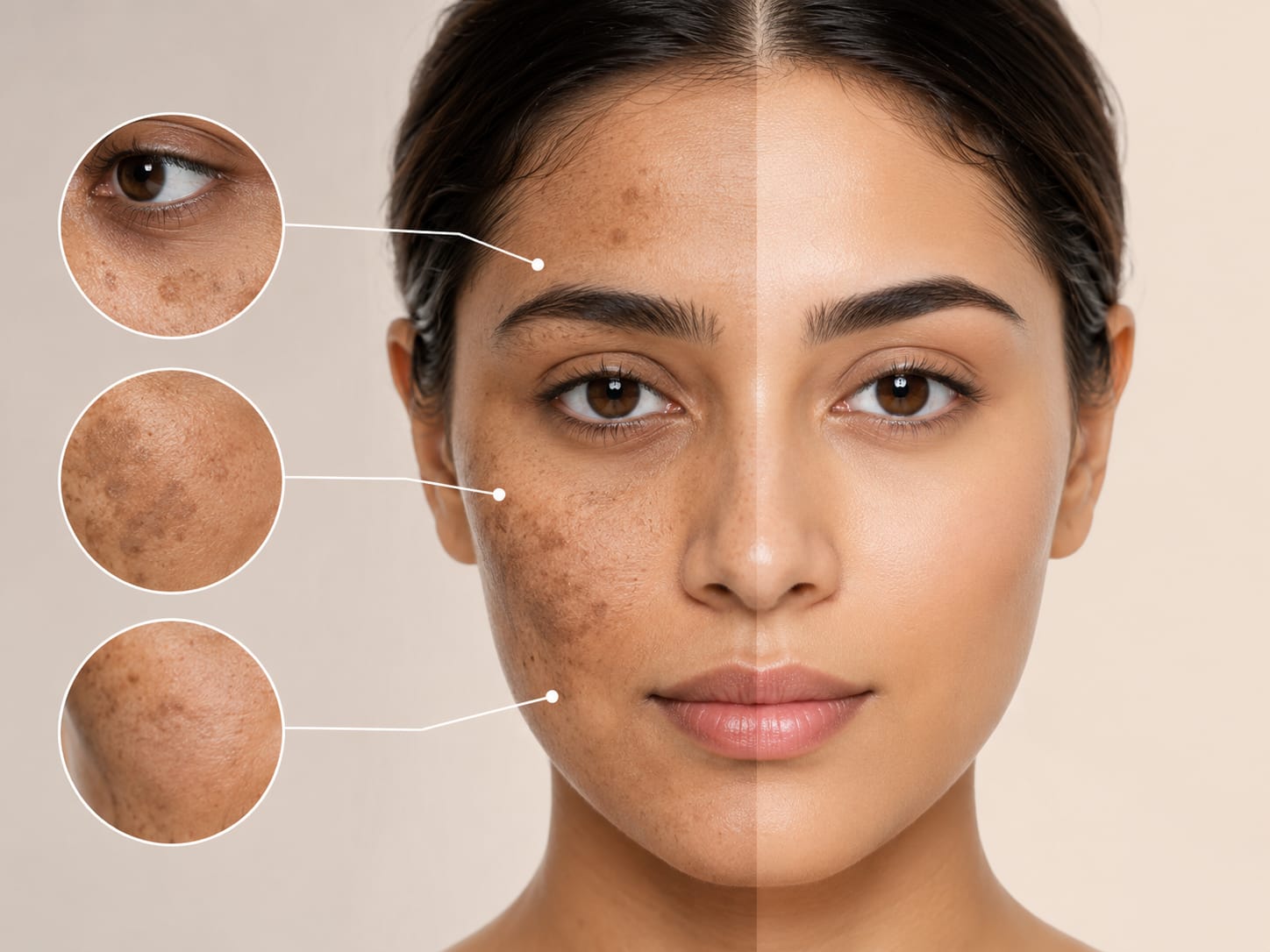
Dark spots. Uneven patches. A tone that never quite looks consistent. If this sounds familiar, you’ve probably already tried a few products that promised results and didn’t deliver.
The truth is, effective skin pigmentation treatment depends entirely on what’s actually causing your specific pigmentation. This guide breaks down the main types, what causes each, and which treatments genuinely help, based on care available at Dr. Pankti’s REVIVE in Borivali.
What Causes Skin Pigmentation?
Pigmentation happens when skin cells called melanocytes produce excess melanin, the pigment responsible for skin colour. So when melanin builds up unevenly, it creates darker patches or spots.
For a clinical overview of hyperpigmentation, Cleveland Clinic’s guide to hyperpigmentation offers a helpful, medically reviewed explanation.
Common Types of Skin Pigmentation
Melasma
Melasma appears as brownish patches, often on the cheeks, forehead, or upper lip. Because it’s strongly linked to hormones, it’s common during pregnancy or with hormonal contraceptives.
Post-Inflammatory Hyperpigmentation (PIH)
This develops after skin trauma, such as acne, cuts, or burns. As the skin heals, it can leave behind a darker mark. So the mark fades slowly, often over several months.
Sun Spots (Solar Lentigines)
These are flat, brown spots caused by cumulative sun exposure. So they typically appear on areas that get the most sun, like the face, hands, and shoulders.
Freckles
Freckles are small, genetically influenced spots. However, they often darken further with sun exposure.
Quick Reference: Type, Cause, and Look
| Type | Main Cause | Typical Appearance |
| Melasma | Hormones, sun exposure | Symmetrical brown patches on the face |
| PIH | Healing after acne, injury, or inflammation | Flat dark marks at the site of injury |
| Sun spots | Cumulative UV exposure | Flat brown spots on sun-exposed areas |
| Freckles | Genetics, sun exposure | Small, scattered light-brown spots |
Because each type has a different root cause, identifying yours correctly is what actually determines the right treatment.
Why Melasma Needs a Different Approach
Melasma behaves differently from other pigmentation types. It’s more common in darker skin tones, since more active melanocytes make it easier to trigger. Because it’s hormonally driven, it can also be more stubborn and prone to recurrence.
Importantly, aggressive treatments like strong lasers can sometimes worsen melasma rather than improve it. So a gentler, more gradual approach, alongside strict sun protection, usually works best.
If your main concern is melasma, treatments that rely heavily on light-based technology should be chosen carefully. Our guide on photofacial treatment explains this candidacy consideration in more detail.
Skin Pigmentation Treatment Options
Treatment is selected based on your specific pigmentation type, skin tone, and how it responds over time.
- Topical agents — ingredients like vitamin C, azelaic acid, kojic acid, and prescription-strength options that reduce melanin production
- Chemical peels — exfoliate pigmented surface cells and encourage more even skin renewal
- MNRF — supports collagen remodeling and can help select pigmentation concerns with minimal surface disruption
- Photofacial (IPL) — targets pigment using light energy, best suited to lighter to medium skin tones without active melasma
- Sun protection — the single most important step in both treating and preventing further pigmentation
Because pigmentation often responds to combined approaches, a personalised plan usually outperforms any single product or treatment used alone.
Which Treatment Suits Your Type?
| If You Have… | Treatment Often Considered |
| Melasma | Topical agents, gentle chemical peels, strict sun protection; light-based treatments used cautiously |
| Post-acne marks | Chemical peels, topical treatment, MNRF for related texture concerns |
| Sun spots or freckles | Photofacial (IPL), chemical peels, topical lightening agents |
| Mixed or uncertain type | A clinical assessment to confirm the type before starting treatment |
A Word of Caution About Unregulated Creams
Some over-the-counter “fairness” or skin-lightening creams contain unregulated steroids or banned ingredients like mercury. As a result, these can cause serious, lasting skin damage.
- Avoid creams without clear ingredient labelling or regulatory approval
- Be cautious of products promising dramatic results within days
- Use only dermatologist-recommended or prescribed formulations
If a product burns, stings, or causes unusual skin changes, stop using it immediately and consult a professional.
Preventing Pigmentation from Returning
- Apply broad-spectrum sunscreen daily, and reapply every two to three hours outdoors
- Wear a wide-brimmed hat during peak sun hours
- Avoid picking at acne or healing skin, which can worsen PIH
- Use gentle, non-irritating skincare products
- Continue maintenance treatment even after visible spots fade
Because new pigmentation can form even after old spots clear, ongoing prevention matters just as much as active treatment.
What to Expect at a Consultation
- A detailed skin history, including onset, triggers, and previous treatments tried
- A close examination to identify the specific pigmentation type present
- Discussion of your skin tone and how it factors into treatment safety
- A personalised treatment plan combining the most suitable options
- Realistic expectations about timelines, especially for melasma
Common Myths About Pigmentation
| Myth | Fact |
| All pigmentation responds to the same treatment. | Different types have different causes, so treatment needs to match the specific type. |
| Laser treatment is always the best option. | For melasma specifically, aggressive light-based treatments can sometimes worsen the condition. |
| Once treated, pigmentation never returns. | New pigmentation can form without ongoing sun protection and maintenance care. |
| Home remedies can fully treat pigmentation. | Some home care supports results, but clinical treatment is usually needed for meaningful, lasting change. |
| Fairness creams are a safe shortcut. | Many unregulated products contain harmful ingredients and can cause lasting skin damage. |
Related Skin Treatment Guides
Pigmentation treatment often overlaps with other skin concerns and technologies.
For a deeper look at how peels support pigmentation specifically, our guide on how chemical peels work explains the science.
If you’re considering a light-based option, our guide on photofacial treatment and its indications explains candidacy and skin tone considerations.
For textural concerns alongside pigmentation, our guide on MNRF treatment explains another effective option.
Frequently Asked Questions
Can skin pigmentation be removed completely?
Many types improve significantly with the right treatment. However, some, especially melasma, tend to be more persistent and need ongoing management.
How long does pigmentation treatment take to show results?
This depends on the type and treatment used. So most visible improvement takes several weeks to a few months of consistent treatment.
Is melasma harder to treat than other pigmentation?
Yes, generally. Because it’s hormonally driven and prone to recurrence, melasma often needs a gentler, more patient approach than other pigmentation types.
Can I use chemical peels and photofacial together?
Sometimes, depending on your specific pigmentation type and skin tone. So a consultation helps determine the right combination and sequence.
Are pigmentation creams safe to use long-term?
Dermatologist-prescribed formulations are generally safe under supervision, but unregulated products can cause serious harm and should be avoided.
Will pigmentation come back after treatment?
It can, especially without consistent sun protection. Ongoing prevention is just as important as the initial treatment.
Final Thoughts
Effective skin pigmentation treatment starts with correctly identifying what’s actually causing your specific spots or patches. From there, a personalised, combined approach, paired with consistent sun protection, gives you the most realistic path to clearer, more even skin.
Book Your Pigmentation Consultation Today
If dark spots or uneven tone are bothering you, the team at Dr. Pankti’s REVIVE Skin, Aesthetic, Laser & Hair Clinic in Borivali can identify your specific pigmentation type and build the right treatment plan.
Clinic: Dr. Pankti’s REVIVE Multispeciality Clinics
Location: Borivali, Mumbai, Maharashtra
Call: 9619758202