

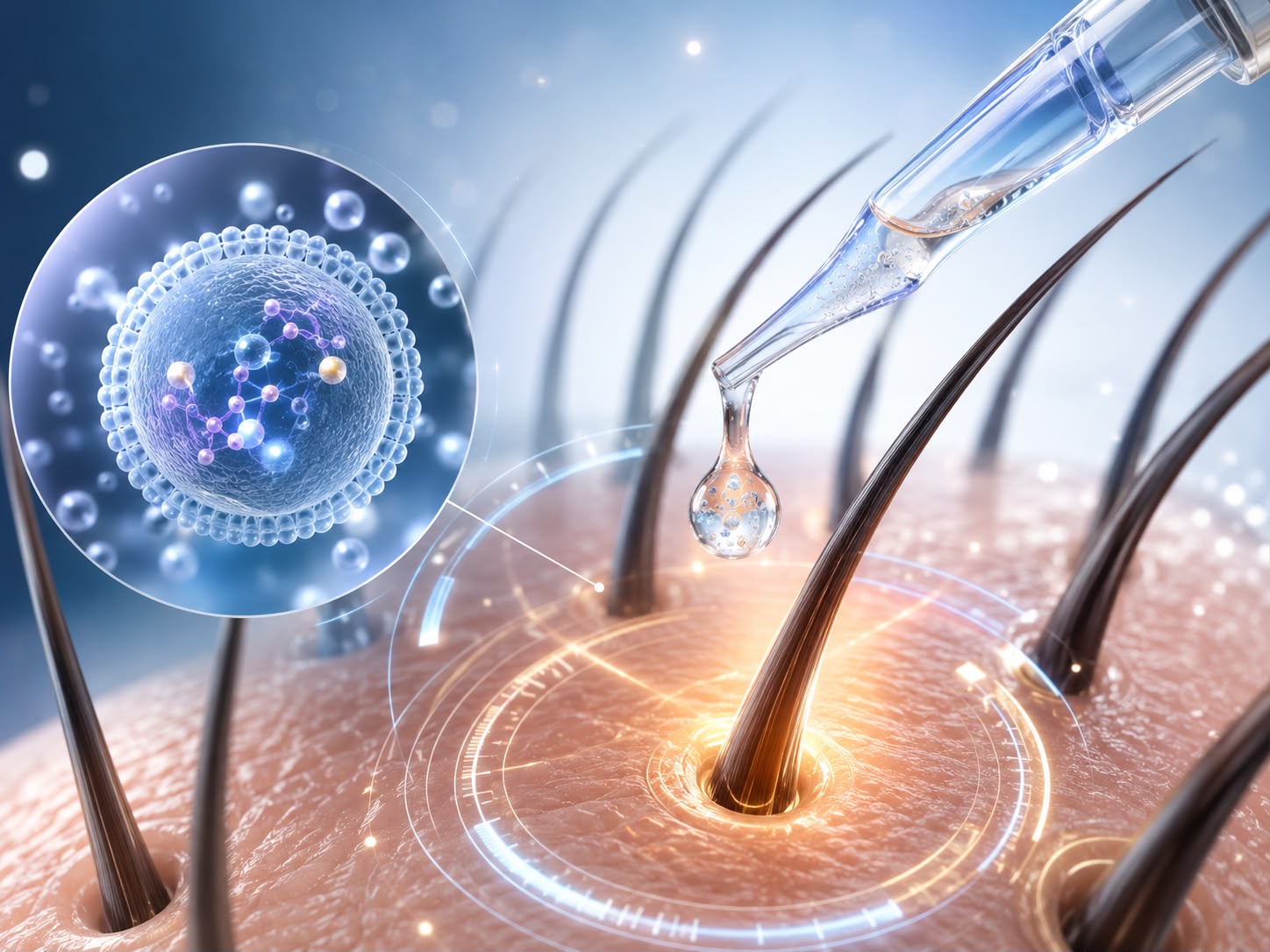
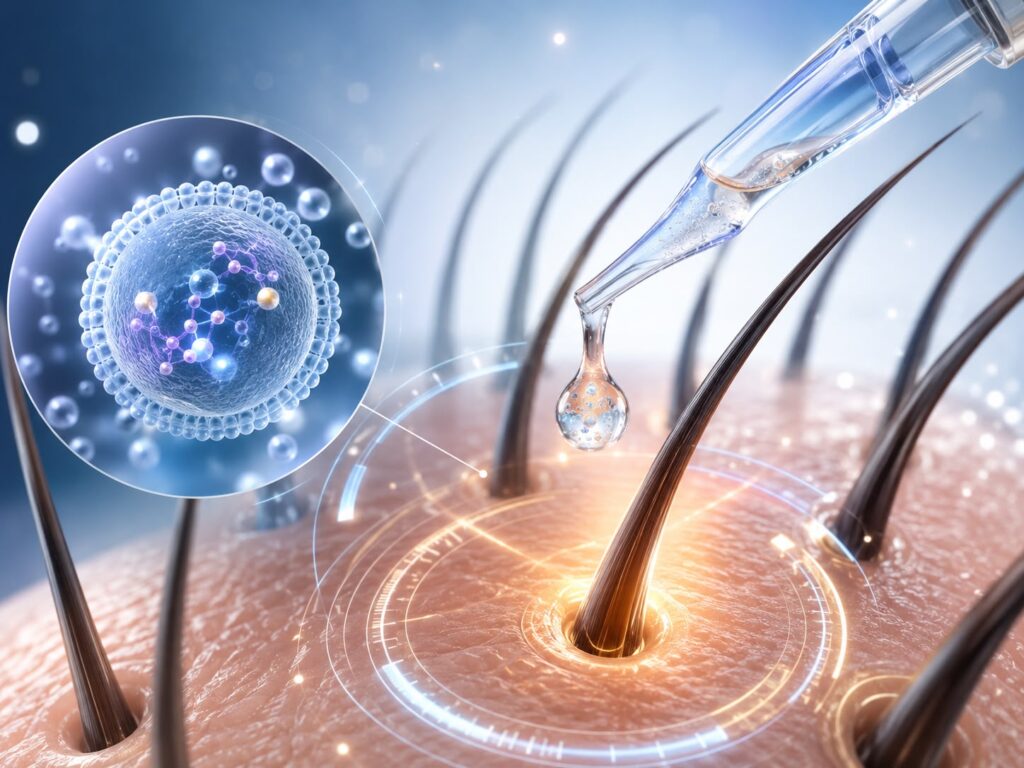
Hair loss is one of the most common concerns affecting both men and women today. From stress-induced hair fall to genetic baldness, people are increasingly seeking advanced and minimally invasive solutions for hair restoration. Among the latest breakthroughs in regenerative medicine is Exosome Hair Therapy — a scientifically evolving treatment showing promising results in hair regrowth and scalp rejuvenation.
At Dr. Pankti’s REVIVE Clinic, we believe in educating patients about modern treatment options backed by emerging science. This article explains everything you should know about exosome therapy for hair loss.
What Are Exosomes?
Exosomes are microscopic extracellular vesicles naturally released by cells in the body. They act as biological messengers and carry important growth factors, proteins, lipids, messenger RNA (mRNA), cytokines, and genetic signals between cells.
In regenerative medicine, exosomes are commonly derived from:
- Mesenchymal stem cells (MSCs)
- Umbilical cord tissue
- Bone marrow-derived cells
- Adipose (fat)-derived stem cells
Unlike stem cells, exosomes themselves are not living cells. Instead, they are cell-derived particles that help stimulate tissue repair, healing, and regeneration.
In hair treatment, exosomes are used to:
- Stimulate dormant hair follicles
- Improve scalp circulation
- Reduce inflammation around follicles
- Enhance hair thickness and density
- Support faster hair regrowth
How Do Exosomes Work in Hair Treatment?
Hair follicles often become weak due to inflammation, hormonal imbalance, reduced blood supply, aging, stress, or autoimmune activity. Exosomes help “signal” the follicles to enter the active growth (anagen) phase.
Exosome therapy works by:
- Delivering regenerative growth factors directly into the scalp
- Activating stem cells around hair follicles
- Improving follicular microenvironment
- Enhancing collagen production
- Reducing oxidative stress and inflammation
The treatment is usually performed using:
- Microneedling
- Mesotherapy injections
- Dermapen-assisted delivery
- Combination with PRP therapy
Indications of Exosome Hair Therapy
Exosome therapy may be considered for the following hair conditions:
- Androgenetic Alopecia (Male & Female Pattern Baldness): One of the most common indications where follicles progressively miniaturize.
- Diffuse Hair Fall: Hair shedding caused by stress, illness, nutritional deficiencies, or hormonal changes.
- Early-Stage Hair Thinning: Patients experiencing reduced density and widening partitions.
- Postpartum Hair Loss: Hair fall occurring after pregnancy due to hormonal shifts.
- Alopecia Areata (Selected Cases): Some emerging studies are exploring exosomes for autoimmune-related patchy hair loss.
- Hair Transplant Support: Exosomes may help improve graft survival and healing after hair transplant surgery.
- Scalp Inflammation: Conditions involving scalp irritation and inflammatory changes may benefit from regenerative signaling.
Types of Exosomes Used in Hair Therapy
Different types of exosomes are being studied and marketed globally.
1. Mesenchymal Stem Cell (MSC)-Derived Exosomes
The most widely researched type in regenerative medicine.
Sources:
- Umbilical cord
- Bone marrow
- Adipose tissue
Benefits:
- Rich in growth factors
- Anti-inflammatory properties
- Tissue regeneration support
2. Platelet-Derived Exosomes
Derived from platelets and sometimes linked with PRP-based therapies.
Benefits:
- Promote wound healing
- Support vascular growth
- May enhance follicle nourishment
3. Plant-Derived Exosomes
An emerging category under cosmetic biotechnology.
Potential Role:
- Antioxidant support
- Scalp conditioning
Research is still limited compared to MSC-derived exosomes.
4. Synthetic or Bioengineered Exosomes
Laboratory-designed vesicles aiming for targeted therapeutic action.
Current Status:
Mostly experimental and under ongoing research.
Procedure of Exosome Hair Treatment
A typical exosome hair therapy session includes:
Step 1: Scalp Assessment
Hair analysis and diagnosis of the underlying cause of hair loss.
Step 2: Scalp Preparation
Cleaning and local numbing if needed.
Step 3: Microneedling or Injection
Exosomes are delivered into the scalp using:
- Dermapen
- Mesogun
- Fine needle injections
Step 4: Recovery
Minimal downtime. Patients can usually resume normal activities within 24 hours.
Merits of Exosome Hair Therapy
1. Minimally Invasive
No surgery or major downtime involved.
2. Regenerative Approach
Targets scalp healing and follicular stimulation naturally.
3. Potential Hair Density Improvement
Some patients report thicker and healthier hair growth.
4. Reduced Inflammation
Useful in inflammatory scalp conditions.
5. Faster Recovery
Compared to surgical interventions.
6. Combination Potential
Can be combined with:
- PRP
- GFC
- Microneedling
- Hair transplant procedures
Demerits and Limitations of Exosome Therapy
Despite the excitement around exosomes, patients should also understand the limitations.
1. Limited Long-Term Research
Large-scale clinical studies are still evolving.
2. Lack of Standardization
Different clinics may use different exosome sources and concentrations.
3. Regulatory Variations
Approval status differs across countries.
4. Cost
Exosome therapy is often more expensive than PRP.
5. Variable Results
Results depend on:
- Age
- Cause of hair loss
- Follicle viability
- Overall health
6. Not a Cure for Advanced Baldness
Completely inactive follicles may not respond effectively.
Role of Exosomes in Hair Management
Exosomes are increasingly being explored as part of a comprehensive hair restoration strategy.
They May Help:
- Slow progression of hair thinning
- Improve scalp quality
- Support follicular regeneration
- Enhance outcomes of existing treatments
- Improve post-transplant healing
However, they should not be viewed as a standalone miracle cure. Best outcomes usually occur when combined with:
- Nutritional correction
- Hormonal evaluation
- Lifestyle modifications
- Medical therapy
- Scalp care
Final Thoughts
Exosome Hair Therapy represents one of the most exciting advancements in regenerative hair medicine. While still evolving scientifically, it offers a promising option for individuals experiencing hair thinning and early hair loss.
As research continues, exosomes may become an important component of personalized hair restoration protocols in the future.
If you are experiencing hair fall, thinning, or scalp-related concerns, professional evaluation remains essential to determine the most suitable treatment approach.
Consult Dr. Pankti’s REVIVE Clinic
For advanced hair analysis and personalized hair restoration treatments in Mumbai, visit:
📞 Call now : 9619758202