

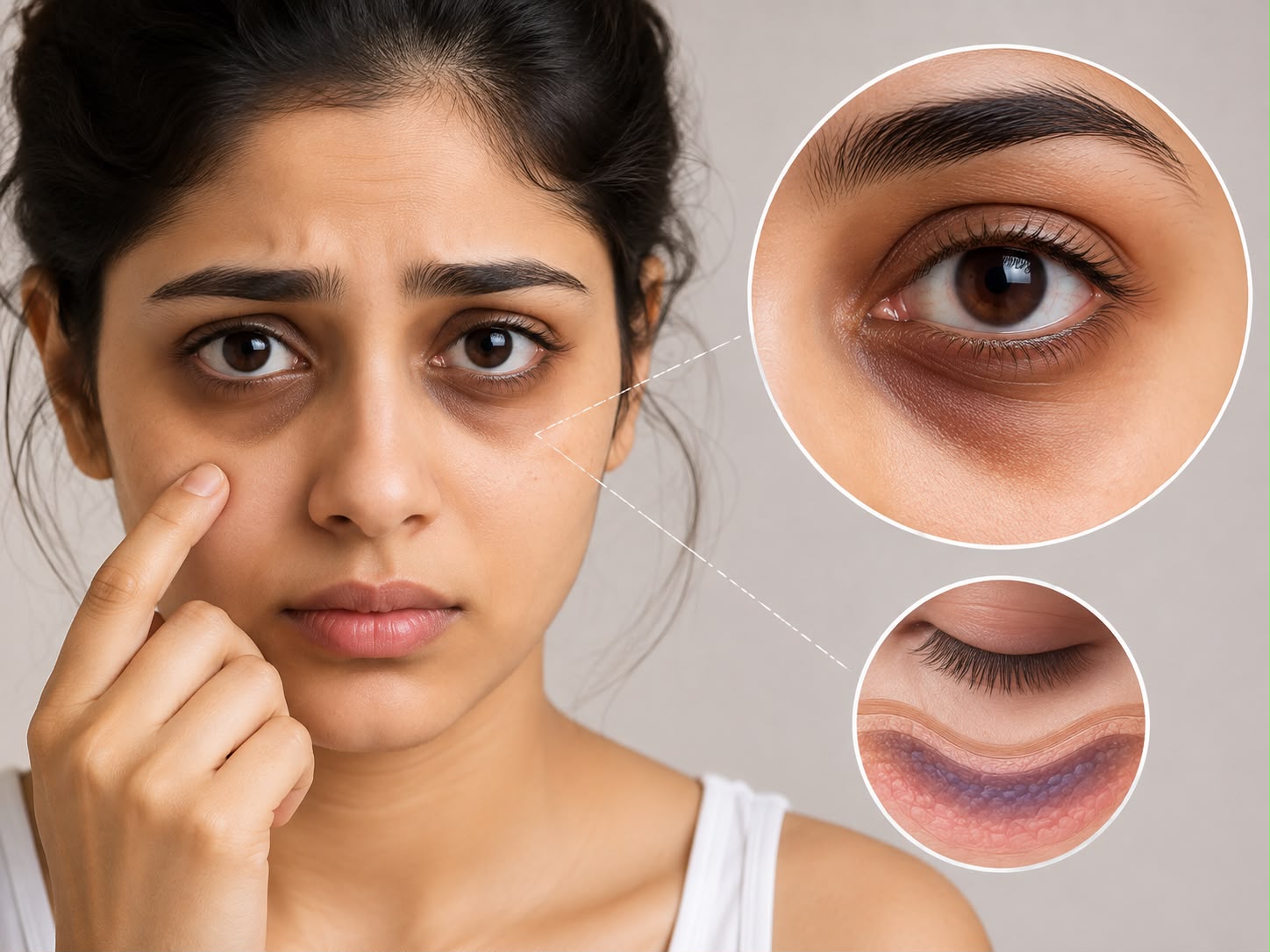
You slept a full eight hours. So why do you still look tired? Under eye dark circles are one of the most common skin concerns, and one of the most misunderstood.
This guide explains the real causes behind them, which home habits actually help, and which treatments work best at Dr. Pankti’s REVIVE in Borivali.
What Causes Dark Circles Under the Eyes?
The skin under your eyes is thinner and more delicate than skin elsewhere on your face. Because of this, several factors show through more easily here than anywhere else.
For a clinical overview of the underlying causes, Cleveland Clinic’s guide to dark circles under the eyes offers a helpful, medically reviewed explanation.
The Main Causes, Explained
Genetics
For many people, dark circles simply run in the family. Thinner under-eye skin and higher natural pigmentation can both be inherited traits.
Ageing
As skin ages, it loses collagen and fat volume. So blood vessels underneath become more visible, and hollows can form shadows of their own.
Lack of Sleep
Poor sleep affects circulation and fluid drainage around the eyes. As a result, blood pools more visibly, and skin can look paler, making vessels stand out further.
Allergies and Rubbing
Allergies trigger histamine release, which dilates blood vessels. Because rubbing or scratching worsens this further, it can also lead to pigmentation over time.
Dehydration
When skin is dehydrated, it looks duller and slightly sunken. This can make the area appear more hollow and shadowed than it actually is.
Sun Exposure
UV exposure increases melanin production. So sun exposure over time can directly darken the skin under the eyes.
Quick Reference: Cause vs. What It Looks Like
| Cause | How It Typically Appears |
| Genetics or ageing | Brownish or bluish tone, gradual onset |
| Lack of sleep or fatigue | Puffiness alongside darker shadows |
| Allergies or rubbing | Bluish-purple tone, sometimes with visible vessels |
| Volume loss (tear troughs) | A visible hollow or groove casting a shadow |
| Sun exposure | Brownish pigmentation, gradual darkening |
Because the cause varies so much, identifying yours is the first step toward choosing a treatment that actually works.
Home Habits That Can Help
- Apply a cold compress or chilled spoon to reduce puffiness and constrict vessels
- Prioritise consistent, adequate sleep
- Stay well hydrated throughout the day
- Wear sunscreen daily, even under the eyes
- Manage allergies, since untreated allergies can worsen pigmentation over time
- Avoid rubbing or scratching the eye area
Home habits help with mild cases, especially those linked to fatigue or dehydration. However, genetic or structural causes usually need professional treatment to see real change.
Professional Treatment Options
Because dark circles have several possible causes, treatment works best when it’s matched to your specific case.
- Topical treatments — prescription-strength creams targeting pigmentation or vessel visibility
- Chemical peels — help reduce pigmentation-related dark circles over a series of sessions
- Under-eye fillers — restore lost volume in tear troughs, softening the shadow they cast
- Laser treatments — target pigmentation or visible blood vessels directly
- PRP therapy — uses your own blood’s growth factors to support skin renewal in the area
A consultation helps determine which combination suits your specific cause and skin type.
Which Treatment Suits Your Cause?
| If the Main Issue Is… | Treatment Often Considered |
| Pigmentation | Chemical peels, topical lightening agents, laser treatment |
| Visible blood vessels | Laser treatment targeting vessels |
| Volume loss or hollowing | Under-eye fillers |
| General dullness or fine lines | PRP therapy, topical retinoids |
What to Expect at a Consultation
- A close examination of the under-eye skin, pigment, and structure
- Discussion of your sleep, allergy, and lifestyle history
- Identification of the primary cause, since more than one factor is often involved
- A personalised treatment plan based on your specific presentation
Because multiple causes often overlap, combination treatments are frequently recommended for the best results.
Is Treatment for Dark Circles Safe?
When performed by trained professionals, treatments like peels, fillers, and laser therapy are considered safe for the delicate under-eye area.
That said, this skin is thinner and more sensitive than elsewhere on the face. So it’s especially important to have these treatments performed by an experienced provider.
Common Myths About Dark Circles
| Myth | Fact |
| Dark circles always mean you’re not sleeping enough. | Sleep is one factor, but genetics, ageing, allergies, and sun exposure all play a role too. |
| Eye creams alone can fully remove dark circles. | Creams can help mild cases, but structural or genetic causes usually need in-clinic treatment. |
| Dark circles are purely cosmetic and can’t indicate anything else. | They’re not usually a sign of a serious health issue, though allergies or anemia can sometimes contribute. |
| Once treated, dark circles never return. | Results can be long-lasting, but ongoing sun exposure, sleep habits, and ageing can affect them over time. |
| All dark circles look and respond the same way. | Appearance and treatment both depend heavily on the underlying cause. |
Related Skin Treatment Guides
Dark circles are often treated alongside other skin concerns as part of a broader plan.
If pigmentation is a factor, our guide on how chemical peels work explains how peels support skin renewal and tone.
Frequently Asked Questions
Can dark circles be removed permanently?
Results vary by cause. Genetic and structural causes can improve significantly with treatment, though ongoing care helps maintain results over time.
Do home remedies actually work?
They can help with mild, fatigue-related dark circles, but genetic or structural causes usually need professional treatment for noticeable change.
Are under-eye fillers safe?
When performed by an experienced provider, fillers are considered a safe, well-established option for volume-related dark circles.
How long do chemical peels take to improve dark circles?
Most people need several sessions over a few months to see meaningful improvement in pigmentation-related dark circles.
Can allergies really cause dark circles?
Yes. Allergies can dilate blood vessels and lead to rubbing, both of which can worsen the appearance of dark circles over time.
What’s the best first step if I want treatment?
A proper consultation to identify your specific cause is the best starting point, since treatment works best when it’s matched to what’s actually driving the issue.
Final Thoughts
Under eye dark circles have more than one cause, which is exactly why generic advice often falls short. Identifying your specific cause makes treatment far more effective, whether that’s better sleep habits or an in-clinic procedure.
Book Your Under Eye Consultation Today
If dark circles are affecting your confidence, the team at Dr. Pankti’s REVIVE Skin, Aesthetic, Laser & Hair Clinic in Borivali can identify your specific cause and recommend the right treatment plan.
Clinic: Dr. Pankti’s REVIVE Multispeciality Clinics
Location: Borivali, Mumbai, Maharashtra
Call: 9619758202