

Tattoo Removal: What Actually Happens Under the Laser
A tattoo that felt right at 20 doesn’t always feel right at 35. So if you’re considering tattoo removal, understanding how it actually works helps set realistic expectations from the start.
This guide explains the science behind laser tattoo removal and how many sessions you’ll likely need. So you’ll know what to expect at Dr. Pankti’s REVIVE in Borivali, Mumbai.
How Does Tattoo Removal Actually Work?
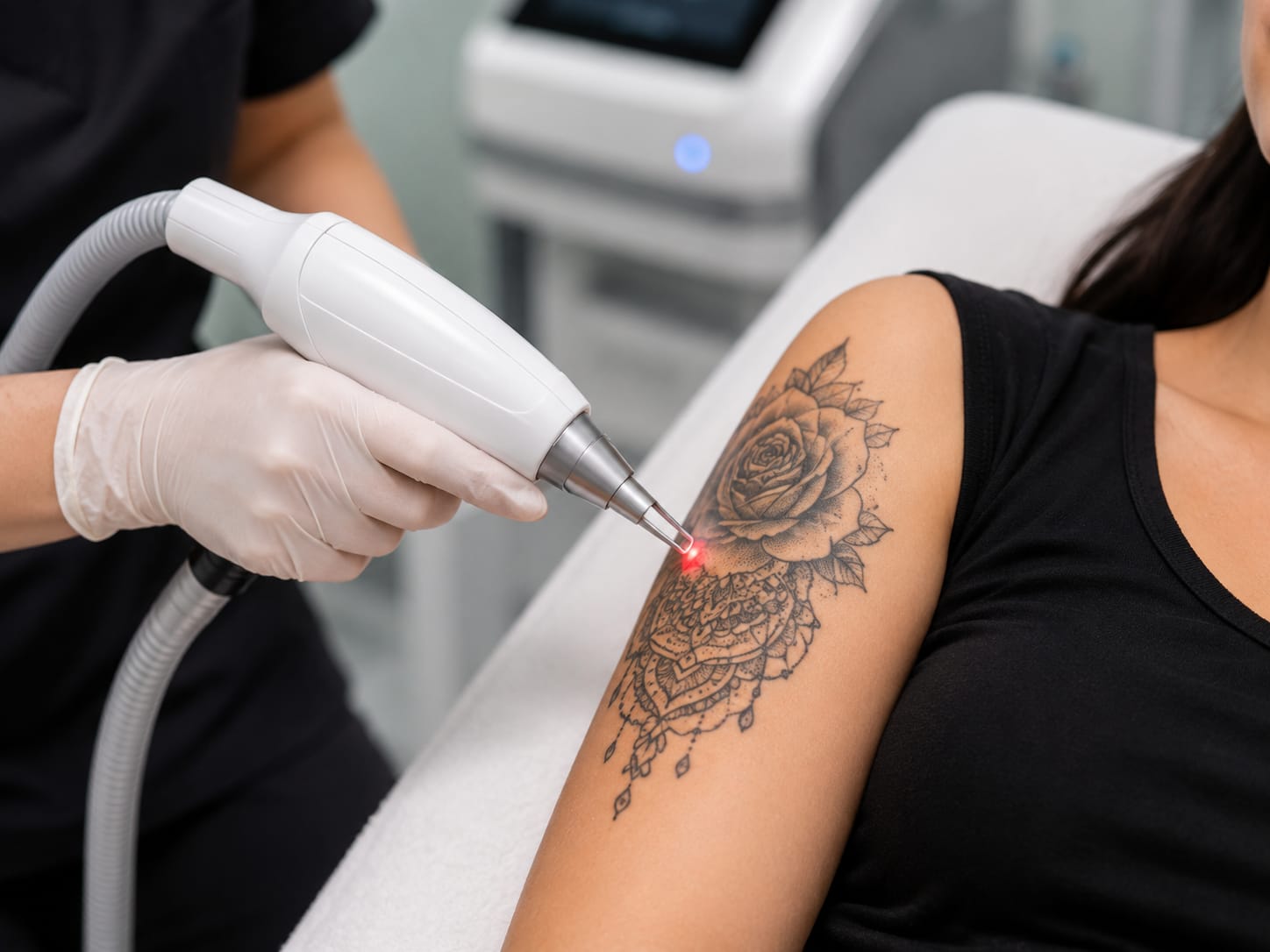
Laser tattoo removal targets ink particles with concentrated pulses of light energy. So the light shatters the ink into tiny fragments.
Here’s the part many people don’t realise: the laser doesn’t remove the ink directly. Instead, your immune system gradually clears these tiny fragments over the following weeks.
For an authoritative overview of the process, the American Academy of Dermatology’s guide to laser tattoo removal explains this mechanism in more detail.
Why You’ll Need More Than One Session
A tattoo artist layers ink into the skin. So a single laser session can’t safely break down every layer at once.
- Most tattoos need 6 to 10 sessions; larger or multicoloured tattoos may need more
- Sessions are typically spaced 6 to 8 weeks apart, giving your immune system time to clear ink fragments
- Each session itself is quick, often just minutes, depending on tattoo size
- Your tattoo should visibly lighten after each session
So the process is gradual by design, not a sign that something’s going wrong.
What Affects How Many Sessions You’ll Need
- Ink colour — black responds best; greens, yellows, and light blues are often more stubborn
- Tattoo age — older tattoos have often already faded somewhat, which can help
- Ink depth and density — professionally applied tattoos with dense ink often take longer than amateur ones
- Tattoo size and location
- Your skin tone, since laser settings need careful calibration for darker skin
- Individual immune response, which varies from person to person
Because darker skin tones absorb laser energy differently, settings must be calibrated carefully to avoid unwanted pigment changes. This is similar to the skin-tone considerations we cover in our photofacial treatment guide.
What to Expect, Session by Session
Progress varies, but a general pattern often emerges across sessions.
| Sessions | What You’ll Typically See |
| 1–2 | Redness and swelling, with early signs of lightening around the edges |
| 3–5 | More noticeable fading, especially for darker ink colours |
| 6–8 | Substantial clearance for many tattoos, particularly black ink |
| 9+ | Continued fading for larger, multicoloured, or denser tattoos |
Every tattoo and every person differs. So this is a general guide rather than a fixed timeline.
What to Expect During a Session
- A topical numbing cream applied roughly an hour beforehand
- A sensation often compared to a rubber band snapping against the skin
- Pinpoint bleeding, redness, or mild swelling immediately afterward
- Possible blistering or crusting over the following days
- A recommendation to keep the area clean and protected as it heals
Most sessions themselves take only a few minutes to around 30 minutes. So the time commitment per visit is often smaller than people expect. Still, the full course takes patience overall.
Aftercare Between Sessions
Good aftercare directly affects both your comfort and your results. So a few simple habits matter.
- Keep the treated area clean and covered as advised
- Avoid picking at scabs or blisters, which can increase scarring risk
- Apply sunscreen diligently, since treated skin is more sun-sensitive
- Avoid swimming pools and prolonged soaking until fully healed
- Follow your provider’s specific wound care instructions between sessions
Is Laser Tattoo Removal Safe?
When trained professionals use properly calibrated, FDA-approved lasers, tattoo removal is considered a safe, well-established procedure.
- Scarring is uncommon with modern lasers, though it remains a possible risk
- Temporary or, rarely, permanent pigment changes can occur, especially in darker skin tones
- Complete removal isn’t guaranteed for every ink colour
- Sun protection remains important throughout the process, as with any laser treatment
Choosing an experienced provider matters significantly here. That’s because incorrect laser selection is the leading cause of complications like scarring or pigment changes.
Common Myths, Debunked
| Myth | Fact |
| One session removes a tattoo completely. | No tattoo can be fully removed in a single session; multiple sessions are always needed. |
| All ink colours respond the same way. | Black ink typically responds best, while some colours like light blue or yellow can be more resistant. |
| Tattoo removal always leaves a scar. | Scarring is uncommon with modern lasers when performed correctly, though it remains a small possibility. |
| Newer tattoos are easier to remove than older ones. | Older tattoos have often faded somewhat already, which can sometimes make them respond faster. |
| Home removal creams work as well as laser treatment. | Unregulated creams lack proven safety and effectiveness, and can cause skin damage without removing ink properly. |
Considering Skin Treatment After Removal?
Once a tattoo has faded or cleared, some people want to address the skin underneath. So uneven tone or texture sometimes becomes the next focus.
Our comprehensive guide on skin pigmentation treatment covers options for addressing tone concerns that may remain.
Frequently Asked Questions
How many sessions will I need?
Most tattoos need 6 to 10 sessions. However, this varies based on ink colour, size, depth, and your individual skin and immune response.
Does tattoo removal hurt?
Most people describe a sensation similar to a rubber band snapping against the skin. Topical numbing cream can help manage discomfort.
Will tattoo removal leave a scar?
Scarring is uncommon with modern lasers used correctly, though it remains a possible risk, especially with improper aftercare.
Can all tattoo colours be removed?
Black ink typically responds best. Some colours, like light blue, green, or yellow, can be more resistant and may not fully clear.
How long does the full removal process take?
Sessions are spaced 6 to 8 weeks apart. So a full course can take anywhere from several months to over a year. It really does depend on the tattoo.
Is tattoo removal safe for darker skin tones?
Yes, when performed with correctly calibrated laser settings by an experienced provider. Skin tone plays an important role in choosing the right approach.
Final Thoughts
Tattoo removal is a gradual process built around your body’s own healing response, not an instant fix. So understanding the realistic timeline and factors involved helps you approach it with the right expectations from the start.
Book Your Consultation Today
If you’re considering tattoo removal, the team at Dr. Pankti’s REVIVE Skin, Aesthetic, Laser & Hair Clinic in Borivali, Mumbai can help. We’ll assess your tattoo and skin to recommend a realistic treatment plan.
Clinic: Dr. Pankti’s REVIVE Multispeciality Clinics
Location: Borivali, Mumbai, Maharashtra
Call: 9619758202