
Thick, scaly patches that won’t clear with regular shampoo. If this sounds familiar, it might not be dandruff at all. Scalp psoriasis is often mistaken for other scalp conditions, which delays proper treatment.
This guide explains scalp psoriasis, how it differs from sebopsoriasis, and which treatments are indicated for each presentation at Dr. Pankti’s REVIVE in Borivali.
What Is This Condition?
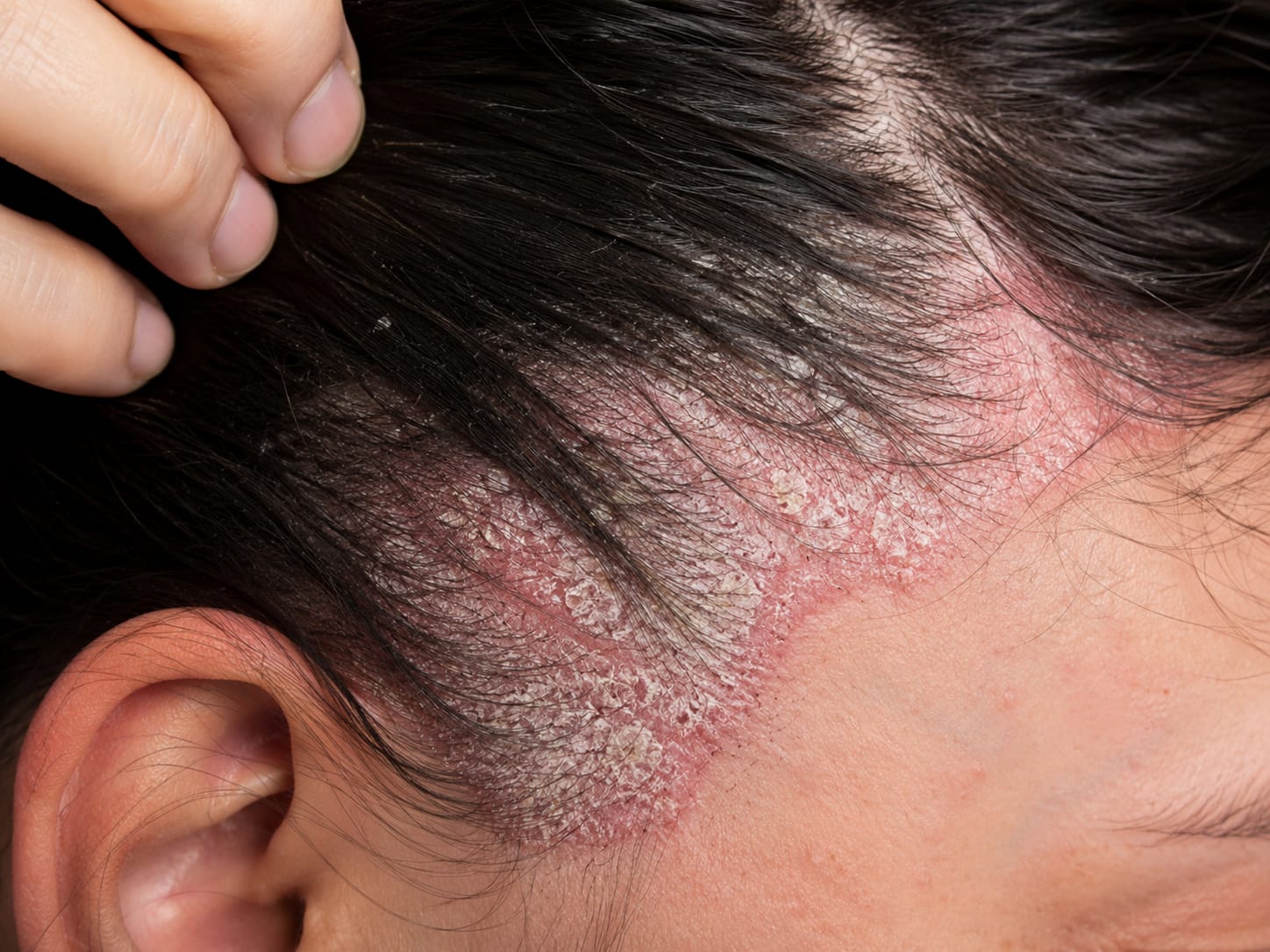
Scalp psoriasis is an autoimmune condition. The immune system sends incorrect signals, causing skin cells to grow far faster than normal. As a result, cells pile up on the surface, forming thick, scaly patches.
It commonly appears as raised, silvery-white scales on a red or pink base. However, it can look more violet or simply lighter than surrounding skin on darker skin tones. So patches can extend beyond the hairline onto the forehead, neck, or behind the ears.
For a clinical comparison of related scalp conditions, Mayo Clinic’s guide to scalp psoriasis vs. seborrheic dermatitis offers a helpful, medically reviewed explanation.
What Is Sebopsoriasis?
Sebopsoriasis sits between two conditions: scalp psoriasis and seborrheic dermatitis. It shares features of both, which is exactly why it’s so often misdiagnosed.
Seborrheic dermatitis is linked to excess oil and yeast overgrowth, producing greasy, yellowish scales. Psoriasis, meanwhile, is autoimmune and produces thicker, drier plaques. So sebopsoriasis combines elements of each, typically appearing as itchy, scaly, sometimes discoloured patches around the hairline and forehead.
Scalp Psoriasis vs. Sebopsoriasis vs. Dandruff
| Feature | Scalp Psoriasis | Sebopsoriasis |
| Underlying cause | Autoimmune, rapid skin cell growth | Combination of psoriasis and yeast-related inflammation |
| Scale appearance | Thick, dry, silvery-white | Greasy, yellowish, sometimes thinner |
| Common areas | Scalp, hairline, behind ears, neck | Hairline, forehead, eyebrows, scalp |
| Response to treatment | Often more persistent, harder to treat | Usually responds faster with combined treatment |
Because the two conditions overlap so closely, an accurate diagnosis is what actually determines which treatment is indicated.
Common Symptoms to Watch For
- Thick, scaly patches on the scalp, sometimes extending to the hairline
- Persistent itching, sometimes intense
- Flaking that doesn’t improve with regular anti-dandruff shampoo
- Redness or discolouration beneath the scales
- Dry, cracked skin that may bleed if scratched
- In some cases, temporary hair thinning in affected patches
Neither condition is contagious. You cannot catch scalp psoriasis or sebopsoriasis from another person, and it isn’t caused by poor hygiene.
What Triggers Flare-Ups?
- Stress
- Cold, dry weather
- Skin injury or scratching the scalp
- Certain medications
- Hormonal changes
- A family history of psoriasis or related autoimmune conditions
Because triggers vary by individual, tracking your own flare-up pattern can help. So it becomes easier to guide long-term management.
Treatment Indications: What’s Recommended and When
Treatment is chosen based on severity, extent, and which condition, or combination, is actually present. So an accurate diagnosis always comes first.
- Mild cases: medicated shampoos containing coal tar, salicylic acid, or ketoconazole
- Moderate cases: topical corticosteroids or vitamin D analogues applied directly to patches
- Sebopsoriasis: combined treatment addressing both the yeast component and the psoriasis component, often antifungal plus anti-inflammatory agents
- More extensive or resistant cases: phototherapy under specialist supervision
- Severe, widespread psoriasis: systemic or biologic treatment, prescribed and monitored by a specialist
This form is often more persistent and harder to treat than seborrheic dermatitis alone, so treatment plans are usually reviewed and adjusted over time rather than fixed from the start.
Which Treatment Is Indicated for Your Presentation?
| If You Have… | Treatment Typically Indicated |
| Mild flaking and itching | Medicated shampoo, used consistently |
| Thick, well-defined plaques | Topical corticosteroids or vitamin D analogues |
| Greasy scales with redness | Combined antifungal and anti-inflammatory treatment and or Homeopathy |
| Widespread or resistant patches | Phototherapy or systemic treatment under specialist care and or Homeopathy |
| Uncertain diagnosis | Clinical assessment to confirm psoriasis, sebopsoriasis, or another cause and or Homeopathy |
What to Expect at a Consultation
- A detailed history, including onset, family history, and known triggers
- A close scalp examination to identify the specific pattern present
- Discussion of previous treatments tried and their results
- A personalised treatment plan based on severity and presentation
- Follow-up visits to track improvement and adjust treatment as needed
Supportive Home Care
- Apply a gentle moisturiser or petroleum jelly to soothe dry, cracked skin
- Avoid scratching or picking at scales, since this can worsen irritation
- Manage stress through regular activity or relaxation techniques
- Use lukewarm, not hot, water when washing your scalp
- Follow your prescribed treatment consistently, even after symptoms improve
Common Myths, Debunked
| Myth | Fact |
| It’s just bad dandruff. | Scalp psoriasis is an autoimmune condition, distinct from ordinary dandruff, and usually needs targeted treatment. |
| It’s contagious. | Neither scalp psoriasis nor sebopsoriasis can spread from person to person. |
| Regular anti-dandruff shampoo will clear it eventually. | These conditions often need medicated or prescription treatment, not just over-the-counter shampoo. |
| It’s caused by poor hygiene. | It’s linked to immune function and, in sebopsoriasis, yeast overgrowth, not cleanliness. |
| Once treated, it never comes back. | Both conditions can flare periodically, so ongoing management is often part of long-term care. |
Related Scalp Health Guides
Scalp symptoms can overlap significantly, which makes accurate diagnosis essential.
If your symptoms seem milder, our guide on dandruff vs dry scalp explains how to tell these more common conditions apart.
Frequently Asked Questions
Is it the same as dandruff?
No. Dandruff is typically a milder, yeast-related condition, while this condition is autoimmune and often needs targeted medical treatment.
Can sebopsoriasis be cured completely?
There’s no permanent cure yet. However, consistent treatment can control symptoms effectively and extend periods between flare-ups.
Does it cause hair loss?
It can cause temporary thinning in affected areas, usually from scratching or inflammation, though hair typically regrows once the condition is controlled.
How long does treatment take to work?
This varies by severity and treatment type. Mild cases may improve within a few weeks, while more extensive cases can take longer.
Can stress trigger a flare-up?
Yes. Stress is a commonly reported trigger, alongside cold weather, skin injury, and hormonal changes.
Should I see a specialist or try over-the-counter products first?
If flaking persists despite regular anti-dandruff shampoo, or you notice thick plaques or bleeding, it’s best to get a proper diagnosis rather than guessing.
Final Thoughts
Scalp psoriasis and sebopsoriasis are often mistaken for stubborn dandruff, which delays the right treatment. Getting an accurate diagnosis is what determines which treatment is actually indicated for your specific case.
Book Your Scalp Consultation Today
If you’re dealing with persistent, scaly, or itchy patches that haven’t responded to regular shampoo, the team at Dr. Pankti’s REVIVE Skin, Aesthetic, Laser & Hair Clinic in Borivali can diagnose your condition and build the right treatment plan.
Clinic: Dr. Pankti’s REVIVE Multispeciality Clinics
Location: Borivali, Mumbai, Maharashtra