

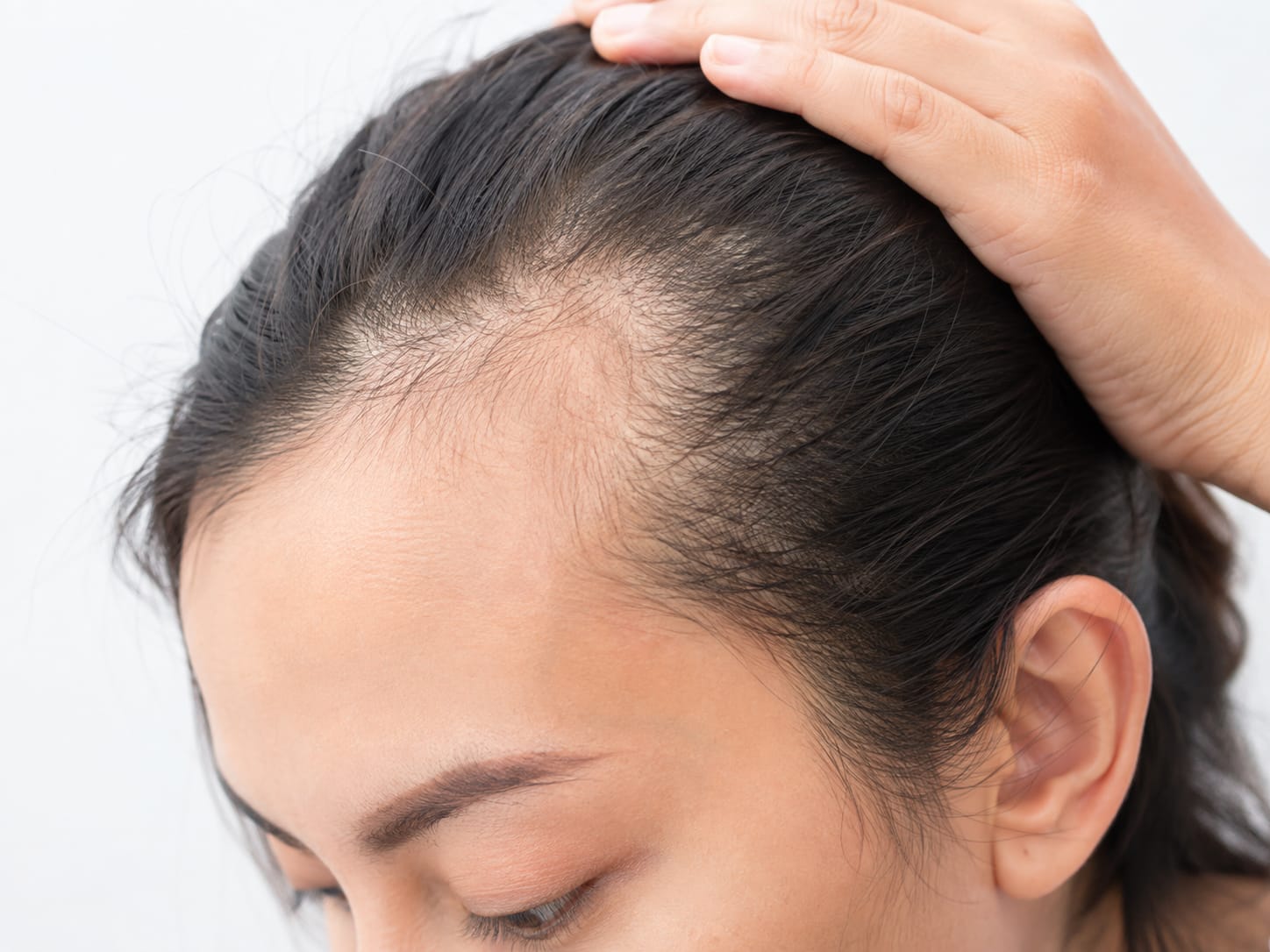
Your hairline looks a little higher than it used to. Is this normal ageing, or the first sign of something more? A receding hairline can mean different things, and knowing which one applies to you changes everything about treatment.
This guide explains what a receding hairline typically indicates, how to tell natural maturation from progressive hair loss, and which treatments are indicated at each stage, based on care available at Dr. Pankti’s REVIVE in Borivali.
What Causes a Receding Hairline?
In most cases, a receding hairline is the earliest visible sign of androgenetic alopecia, commonly known as pattern hair loss. It’s driven by a hormone called DHT (dihydrotestosterone).
Genetically sensitive hair follicles shrink gradually when exposed to DHT. As a result, hair growth cycles shorten. So follicles eventually produce finer, shorter hair before stopping altogether.
For a detailed clinical review of this process, this peer-reviewed overview of androgenetic alopecia treatment explains the underlying science.
Mature Hairline or Receding Hairline?
Not every shift in hairline shape is a problem. In fact, many men naturally develop a slightly higher, more angular hairline in their 20s. This is called a mature hairline, and it’s a normal part of ageing, not hair loss.
A truly receding hairline, however, tends to progress further over time. So the distinction matters, because one needs no treatment while the other benefits from early action.
Early Indications to Watch For
- Increased shedding, especially around the temples
- A widening gap at the temples, forming an “M” shape
- More visible scalp along the front hairline in certain lighting
- Thinning that continues to progress over months, rather than staying stable
- A family history of pattern hair loss
Because early androgenetic alopecia responds better to treatment than advanced hair loss, catching these signs sooner rather than later matters.
Is It Always Androgenetic Alopecia?
Not necessarily. A few other causes can affect the hairline specifically, and it’s worth ruling these out.
- Traction alopecia — from consistently tight hairstyles pulling on the hairline
- Frontal fibrosing alopecia — an autoimmune condition, more common in women, that recedes the frontal hairline
- Telogen effluvium — temporary, stress- or illness-related shedding that can affect the whole scalp, including the hairline
- Alopecia areata — patchy, autoimmune hair loss that can occasionally affect the hairline area
Because these conditions need different treatments, an accurate diagnosis matters more than guessing based on appearance alone.
How Hairline Recession Progresses
| Stage | Typical Presentation |
| Early | Slight temple recession, mild shedding, hairline shape starting to change |
| Moderate | Noticeable “M” shape, thinning at the crown may also begin |
| Advanced | Significant hairline and crown loss, with only a rim of hair remaining in later stages |
Earlier stages generally respond better to non-surgical treatment. Meanwhile, advanced stages may need surgical options for significant restoration.
Treatment Indications by Stage
Treatment is chosen based on how far the hairline has progressed and your personal goals.
- Early recession: topical minoxidil and low-level laser therapy (LLLT) to slow progression and support existing follicles
- Early to moderate recession: PRP or GFC therapy to stimulate follicle activity, often combined with topical treatment
- Moderate recession: prescription oral medication, such as DHT-blocking agents, considered under specialist supervision
- Advanced recession: hair transplant surgery, for restoring density where follicles are no longer active
Prescription oral treatments need a proper medical evaluation and ongoing supervision, since they carry specific considerations that should be discussed with a specialist rather than self-prescribed.
What to Expect at a Consultation
- A detailed history, including onset, progression, and family history
- A scalp examination to assess follicle health and pattern
- Trichoscopy or other diagnostic tools, if needed, to confirm the cause
- A personalised treatment plan matched to your specific stage and goals
- Follow-up visits to track progress and adjust treatment over time
Common Myths, Debunked
| Myth | Fact |
| Any hairline change means you’re going bald. | A mature hairline is a normal part of ageing and doesn’t always progress into pattern hair loss. |
| It only affects men. | Women can experience hairline recession too, often from a different cause, such as frontal fibrosing alopecia. |
| Nothing can be done once it starts. | Early and moderate recession often responds well to treatment, especially when started early. |
| Wearing caps or helmets causes it. | Everyday headwear doesn’t cause pattern hair loss, though very tight hairstyles can contribute to traction alopecia. |
| Hair transplants are the only real solution. | Non-surgical options like minoxidil, LLLT, and PRP are often effective for earlier stages. |
Related Hair Health Guides
A receding hairline is just one pattern of hair loss. If your symptoms look different, other guides may fit your situation better.
If your hair loss appears as round, isolated patches instead, our guide on alopecia areata explains that distinct autoimmune pattern.
For a closer look at regenerative options, our comparison of GFC vs PRP hair treatment explains how each supports follicle activity.
Frequently Asked Questions
At what age does a receding hairline usually start?
It varies widely. Some men notice early signs in their late teens or twenties, while others may not see changes until later in life.
Can a receding hairline be reversed?
Early-stage recession often responds well to treatment, though fully reversing advanced hair loss usually requires surgical options.
Is a receding hairline always genetic?
Genetics play a major role in androgenetic alopecia, though other causes like traction alopecia or autoimmune conditions can also affect the hairline.
Do women get a receding hairline too?
Yes, though it’s less common and often has a different underlying cause than in men, such as frontal fibrosing alopecia.
How do I know if treatment is working?
Reduced shedding is often the first sign, followed by improved density over several months. Your specialist can track this at follow-up visits.
Should I start treatment even if my hairline has only changed slightly?
Yes, generally. Starting early tends to give better results, since treatment works best on follicles that are thinning but still active.
Final Thoughts
A receding hairline can indicate normal maturation, early pattern hair loss, or occasionally another condition entirely. Identifying which one applies to you is the key step before choosing a treatment path.
Book Your Hairline Consultation Today
If you’re noticing changes to your hairline, the team at Dr. Pankti’s REVIVE Skin, Aesthetic, Laser & Hair Clinic in Borivali can assess your scalp and recommend the treatment best suited to your stage and goals.
Clinic: Dr. Pankti’s REVIVE Multispeciality Clinics
Location: Borivali, Mumbai, Maharashtra
Call: 9619758202