
Dandruff vs Dry Scalp: What’s the Real Difference?
Flaky scalp? You’re probably wondering if it’s dandruff or dry scalp. Many people use both words for the same problem. But they’re not actually the same thing.
The confusion makes sense. Both cause flakes. Both cause itching. However, the cause behind each is different. So the right treatment is different too.
This guide breaks down dandruff vs dry scalp in simple terms. You’ll learn the causes, how to tell them apart, and how to treat each one properly.
What Causes Dry Scalp?
Dry scalp happens when your skin doesn’t have enough moisture. In fact, it’s the same issue that causes dry skin anywhere else on your body.
- Cold or dry weather
- Frequent hot showers
- Harsh shampoos that strip natural oils
- Ageing skin, which produces less oil over time
- Dehydration or low water intake
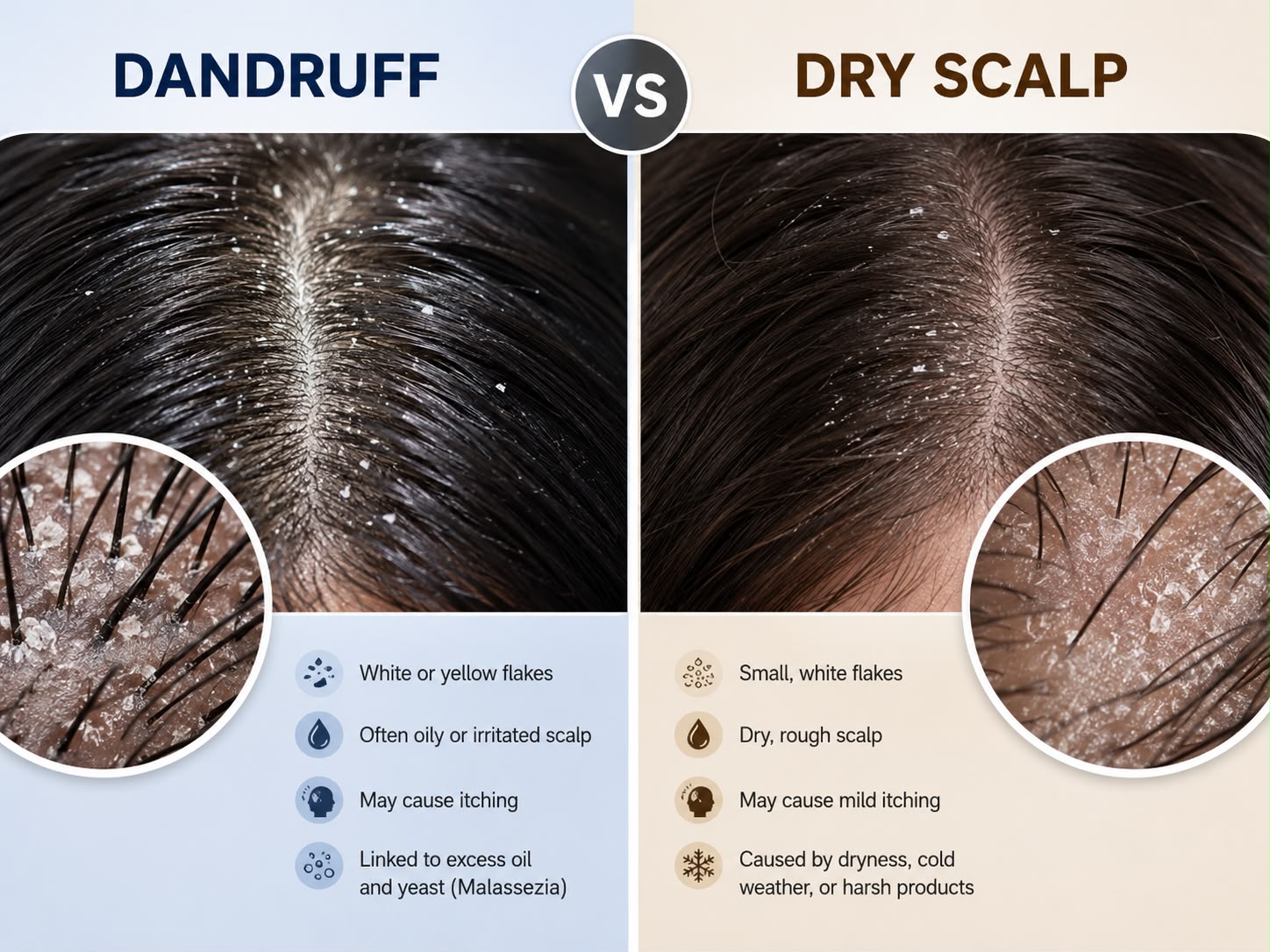
Because dry scalp is about moisture loss, the flakes are usually small, white, and dry. Often, the scalp also feels tight or itchy overall.
What Causes Dandruff?
Dandruff, on the other hand, is usually linked to excess oil, not dryness. That’s because a yeast called Malassezia lives naturally on the scalp. So in some people, it grows out of control and irritates the skin.
- Excess oil (sebum) production
- An overgrowth of Malassezia yeast
- Sensitivity to hair products
- Not washing hair often enough, which lets oil and yeast build up
- Skin conditions like seborrheic dermatitis
As a result, dandruff flakes tend to be larger, yellowish, and slightly oily. The scalp often looks red or greasy underneath.
Dandruff vs Dry Scalp: Symptom Comparison
| Feature | Dry Scalp | Dandruff |
| Flake appearance | Small, white, dry | Larger, yellowish, slightly oily |
| Scalp feel | Tight, dry, itchy | Oily, sometimes red or irritated |
| Main cause | Lack of moisture | Excess oil and yeast overgrowth |
| Common triggers | Cold weather, harsh shampoo, hot showers | Infrequent washing, oily scalp, product buildup |
| Hair type link | Any hair or skin type | More common in oily scalps |
How to Check Which One You Have?
Not sure yet? Try this simple check. First, look closely at the flakes. Then, notice how your scalp feels.
- If flakes are small and your scalp feels tight, it’s likely dry scalp
- If flakes are larger and your scalp looks oily or red, it’s likely dandruff
- If your scalp itches badly and flakes appear on your shoulders often, get it checked professionally
Some people actually have both conditions at once. In that case, self-diagnosis gets tricky, and a scalp assessment helps avoid guesswork.
How to Treat Dry Scalp?
Since dry scalp is about moisture loss, treatment focuses on rehydrating the skin.
- Switch to a gentle, moisturising shampoo without harsh sulphates
- Reduce how often you wash your hair with hot water
- Use a scalp oil or leave-in conditioner
- Stay hydrated and eat enough healthy fats
- Avoid over-brushing or scratching, which can worsen irritation
Most mild cases improve within a few weeks of consistent care.
How to Treat Dandruff?
Dandruff treatment usually targets oil and yeast, not dryness.
- Use a medicated anti-dandruff shampoo with ketoconazole, zinc pyrithione, or salicylic acid
- Wash hair regularly to prevent oil and product buildup
- Leave medicated shampoo on for the recommended time before rinsing
- Avoid heavy, oily hair products
- Rotate shampoo ingredients if one stops working over time
If over-the-counter shampoos don’t help after several weeks, it’s time to see a specialist.
When It’s Something More: Seborrheic Dermatitis and Other Causes?
Sometimes, flaking isn’t simple dandruff or dry scalp. Instead, it could be seborrheic dermatitis, a more inflamed form of dandruff. It can also be psoriasis, eczema, or a fungal infection.
These conditions often need prescription treatment, not just an over-the-counter shampoo. So persistent or severe flaking is worth getting properly diagnosed.
For a clinical overview of dandruff causes and treatment options, Mayo Clinic’s dandruff guide is a helpful, medically reviewed resource.
Common Mistakes That Make Things Worse
- Washing hair too often, which can worsen dry scalp
- Washing hair too rarely, which can worsen dandruff
- Scratching the scalp, which can cause micro-injuries and infection
- Switching shampoos too quickly before giving one a fair trial
- Using very hot water, which strips natural oils
- Ignoring symptoms for months instead of seeking treatment early
Common Myths About Dandruff and Dry Scalp
| Myth | Fact |
| Dandruff means poor hygiene. | Dandruff is caused by oil and yeast, not dirt. In fact, over-washing can sometimes worsen it. |
| Dry scalp and dandruff need the same shampoo. | They need different approaches — moisturising for dry scalp, medicated treatment for dandruff. |
| Dandruff causes hair loss. | Dandruff alone doesn’t cause hair loss, though scratching a lot can irritate follicles. |
| Only oily hair gets dandruff. | Dandruff is linked to scalp oil specifically, not overall hair type, so even dry-looking hair can have an oily scalp underneath. |
| Home remedies always work. | Some help mildly, but persistent dandruff or dry scalp often needs a targeted, medicated approach. |
When Should You See a Trichologist/Dermatologist?
Most mild cases respond to home care. However, some signs mean it’s time for a professional opinion.
- Flaking doesn’t improve after 4–6 weeks of consistent care
- The scalp is red, swollen, or painful
- You notice hair thinning alongside scalp symptoms
- Over-the-counter shampoos cause irritation instead of relief
- Flaking spreads to your eyebrows, ears, or face
Early diagnosis helps rule out conditions like seborrheic dermatitis or psoriasis, and gets you the right treatment faster.
Scalp Health and Hair Growth Are Connected
A healthy scalp is the foundation for healthy hair. So if flaking comes with noticeable hair thinning, nutrition may also play a role.
Read our related guide on hair growth vitamins and nutrition to understand how diet supports scalp and hair health.
Frequently Asked Questions
Can I have dandruff and dry scalp at the same time?
Yes. Some people have both, especially in winter. This makes self-diagnosis tricky, so a scalp check can help.
Does diet affect dandruff or dry scalp?
Diet can play a supporting role. Enough hydration and healthy fats support skin barrier health, though diet alone rarely fixes either condition.
Is dandruff contagious?
No. Dandruff isn’t contagious. It’s caused by oil, yeast, and skin sensitivity, not by contact with another person.
How long does dandruff shampoo take to work?
Most people notice improvement within 2–4 weeks of consistent use. If nothing changes, a different active ingredient may work better.
Can stress cause dandruff or dry scalp?
Stress doesn’t directly cause either condition, but it can worsen symptoms by affecting oil production and skin sensitivity.
Should I stop washing my hair if I have dry scalp?
No. Instead, wash less often with hot water and switch to a gentler, moisturising shampoo.
Final Thoughts
Dandruff vs dry scalp isn’t just a matter of wording — the causes, and the fixes, are genuinely different. Once you know which one you’re dealing with, treatment becomes much more effective.
If home care isn’t helping, don’t just keep switching shampoos. A proper scalp assessment gets to the actual cause faster.
Book Your Scalp Consultation Today
If flaking, itching, or scalp irritation isn’t improving, the team at Dr. Pankti’s REVIVE Multispeciality Clinics in Borivali can assess your scalp and recommend the right treatment.
Clinic: Dr. Pankti’s REVIVE Multispeciality Clinics
Location: Borivali, Mumbai, Maharashtra
Call: 9619758202