
Sun spots, redness, and an uneven tone that no serum seems to fix. Photofacial treatment was designed exactly for concerns like these, using light energy instead of needles or surgery.
This guide explains how it works, its key indications, and what to realistically expect at Dr. Pankti’s REVIVE in Borivali.
What Is a Photofacial?
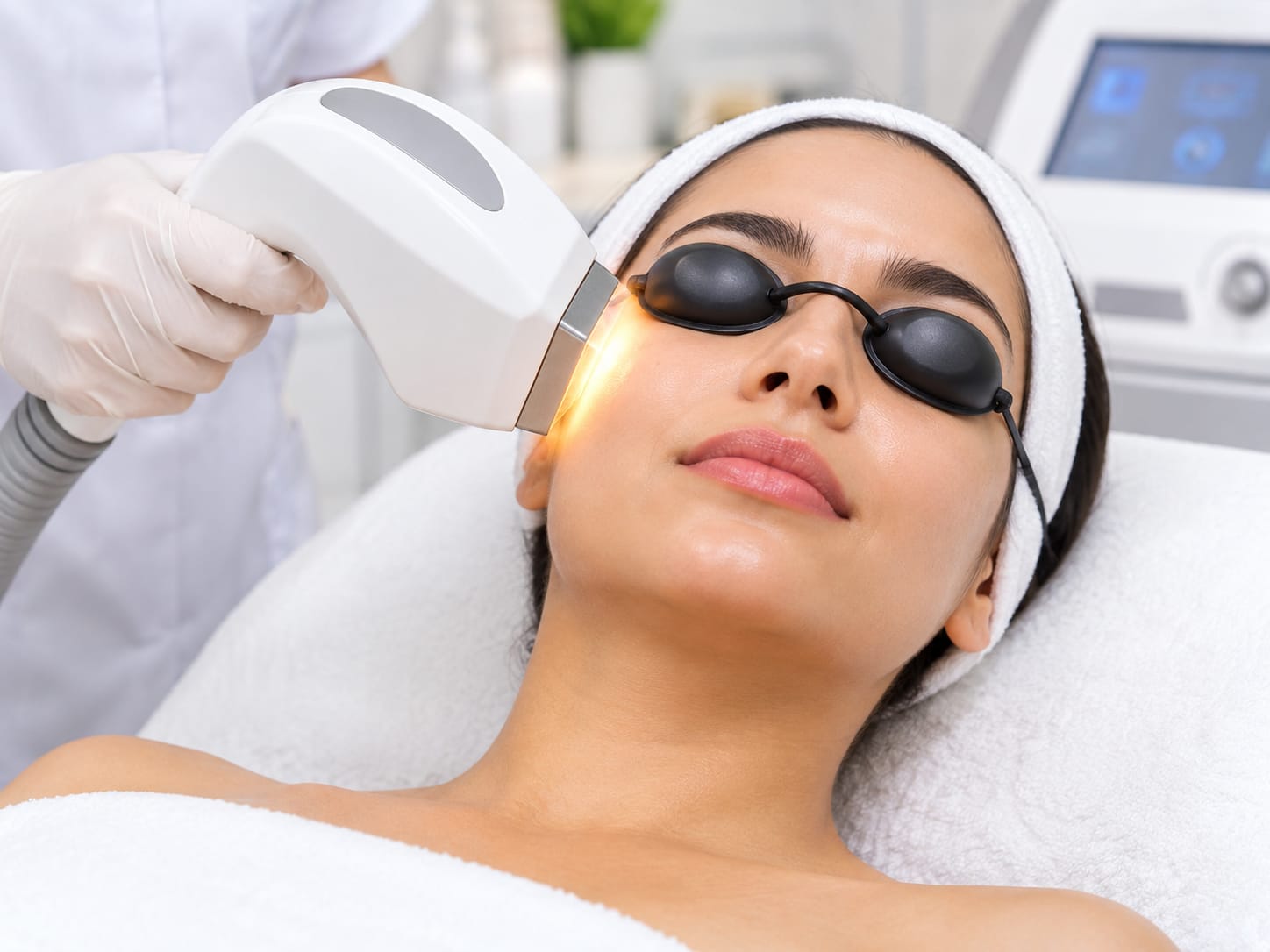
A photofacial, also called IPL treatment, uses intense pulsed light to target colour variations in the skin. It’s non-invasive, so there’s no cutting or downtime like a surgical procedure.
The light is absorbed by pigment or blood vessels beneath the surface. As a result, the body naturally breaks down and clears the targeted cells, revealing brighter, more even-toned skin.
For a detailed clinical overview of the technology, this peer-reviewed StatPearls review of intense pulsed light therapy explains the science in depth.
How Photofacial Treatment Works
- The device delivers broad-spectrum light energy to the skin
- This light is absorbed selectively by melanin or haemoglobin, the pigments in skin and blood vessels
- The absorbed energy converts to heat, breaking down the targeted pigment or vessel
- Over the following days and weeks, the body clears this debris naturally
Because the light targets colour selectively, surrounding skin is largely undisturbed during treatment.
Photofacial Treatment: Key Indications
Photofacial treatment is valued because it addresses several common concerns in one approach.
- Sun spots and age spots
- Freckles and general sun damage
- Facial redness and visible blood vessels
- Mild rosacea
- Uneven skin tone and dullness
- Enlarged pores, as a secondary benefit
- Early signs of ageing, through mild collagen stimulation
Because it targets pigment and vessels specifically, it suits concerns rooted in colour and tone rather than deep textural changes.
Who Is a Good Candidate?
Photofacial treatment relies on contrast between the targeted pigment and the surrounding skin. So skin tone plays an important role in candidacy.
- Best suited to lighter to medium skin tones with clear pigment or vessel concerns
- Not generally recommended for very deep skin tones, since the risk of unwanted pigment changes increases
- Not recommended for active melasma, which can sometimes worsen with this treatment
- A patch test and consultation help confirm suitability before a full session
Because IPL depends on melanin contrast, it needs more careful candidate selection on medium-to-deep skin tones. If your concern is more textural, such as scarring or overall skin laxity, a treatment like MNRF may actually be a safer, more suitable option for your skin type.
What to Expect During a Session
- Skin is cleaned, and protective eyewear is provided
- A cooling gel may be applied to the treatment area
- The device delivers pulses of light across the area
- You may feel a warm, snapping sensation with each pulse
- Most sessions take 20 to 30 minutes, depending on the area treated
Afterward, mild redness is common and usually settles within a few hours to a day.
Results Timeline
- Days 1–3: Initial redness settles; some pigment may darken temporarily before flaking off
- Week 1–2: Brighter, more even tone becomes noticeable
- Weeks 3–6: Continued fading of pigment and redness
- After a full series: Cumulative improvement in tone, texture, and clarity
So results build gradually across sessions rather than appearing all at once.
How Many Sessions Are Needed?
Most people need a series of 3 to 6 sessions, spaced 2 to 4 weeks apart, for meaningful improvement.
Because sun damage and redness can return with ongoing sun exposure, occasional maintenance sessions are often recommended once initial results are achieved.
Is Photofacial Treatment Safe?
When performed by trained professionals with properly calibrated equipment, photofacial treatment is considered safe and well-studied for suitable candidates.
Temporary side effects can include redness, mild swelling, or temporary darkening of treated spots before they fade. These usually resolve within a few days.
Aftercare Tips
- Apply sunscreen diligently every day, since treated skin is more sun-sensitive
- Avoid direct sun exposure and tanning beds for at least two weeks after treatment
- Skip harsh exfoliants and active ingredients for a few days
- Use a gentle, soothing moisturiser
- Avoid picking at any temporarily darkened spots as they flake off naturally
Common Myths About Photofacial Treatment
| Myth | Fact |
| It works the same for every skin tone. | Results and safety depend heavily on skin tone, since the treatment relies on pigment contrast. |
| One session gives complete results. | Most people need a series of sessions for meaningful, lasting improvement. |
| It’s the same as laser resurfacing. | Photofacial targets pigment and vessels using light; it doesn’t resurface the skin’s texture the way ablative lasers do. |
| It can treat melasma effectively. | Melasma can sometimes worsen with this treatment, so it isn’t generally recommended for active melasma. |
| There’s no downtime at all. | Most people have minimal downtime, though mild redness and temporary pigment darkening are common for a few days. |
Related Skin Treatment Guides
Photofacial treatment is often just one part of a broader skin plan.
If your main concern is texture, scarring, or you have a deeper skin tone, our guide on MNRF treatment and its indications explains an alternative that causes less surface disruption.
For pigmentation that needs a different approach, our guide on how chemical peels work covers another effective option.
Frequently Asked Questions
Does photofacial treatment hurt?
Most people feel a warm, snapping sensation with each pulse, rather than significant pain. A cooling gel helps keep skin comfortable.
How many sessions will I need?
Most people need 3 to 6 sessions, spaced 2 to 4 weeks apart, depending on the concern being treated.
Is photofacial treatment safe for all skin tones?
It’s best suited to lighter to medium skin tones. Deeper skin tones carry a higher risk of pigment changes, so a consultation is essential first.
Can photofacial treatment help with acne scars?
It can improve redness associated with scarring, but it isn’t the primary treatment for textural scarring. Other options are usually better suited for that.
How long do results last?
Results can last a long time with good sun protection, though new sun damage or redness can develop again over time without ongoing care.
Can I combine photofacial treatment with other procedures?
Yes. It’s often paired with treatments like chemical peels or MNRF as part of a broader, personalised skin plan.
Final Thoughts
Photofacial treatment offers a light-based way to even out tone, fade sun damage, and reduce redness without surgery. Because it depends on pigment contrast, the right candidacy assessment matters just as much as the treatment itself.
Book Your Photofacial Consultation Today
If you’re curious whether photofacial treatment suits your skin, the team at Dr. Pankti’s REVIVE Skin, Aesthetic, Laser & Hair Clinic in Borivali can assess your skin tone and concerns to recommend the right option.
Clinic: Dr. Pankti’s REVIVE Multispeciality Clinics
Location: Borivali, Mumbai, Maharashtra
Call: 9619758202