

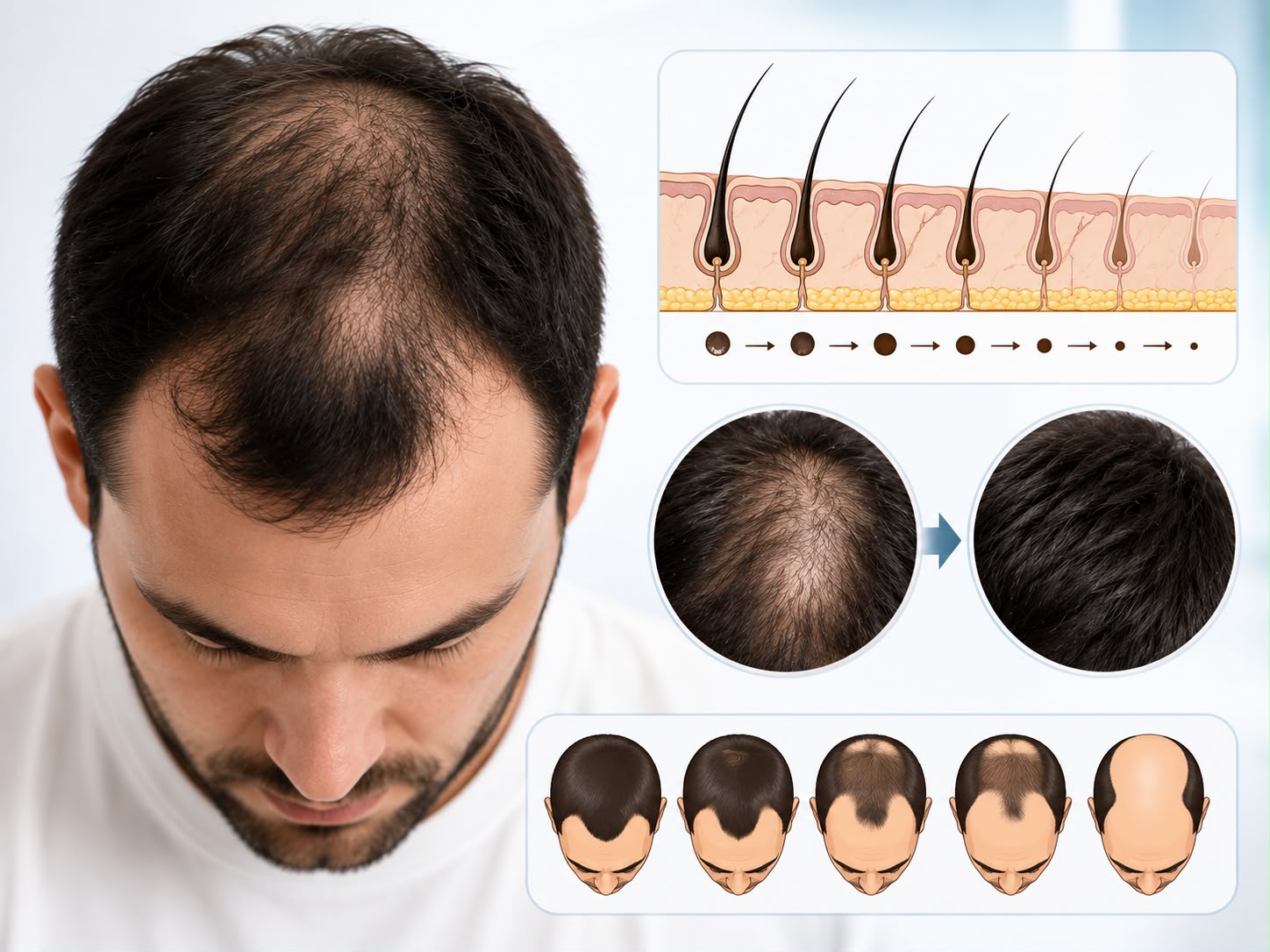
Male pattern hair loss is one of the most common causes of progressive hair thinning in men. It is also called androgenetic alopecia. The condition usually develops gradually, so early changes can be easy to ignore. However, timely evaluation can help identify the cause and guide treatment before more follicles become miniaturised.
Male pattern hair loss often starts with a receding hairline, thinning at the temples, or a small bald area at the crown. Over time, these areas may become more noticeable. Some men also develop diffuse thinning over the top of the scalp. The sides and back of the scalp are often less affected.
What Causes Male Pattern Hair Loss?
Male pattern hair loss is strongly influenced by genetics and the hormone pathway involving dihydrotestosterone (DHT). In susceptible follicles, this process can gradually shorten the growth phase and cause the follicles to become smaller. As a result, hair strands may become finer, shorter and less visible.
Family history can increase the likelihood of androgenetic alopecia. However, you do not need to have an obvious family history to develop it. Age also matters, but male pattern hair loss can begin in the late teens or twenties.
Early Signs of Male Pattern Hair Loss
- A hairline that is slowly moving backward.
- Thinning around the temples.
- A widening or more visible area at the crown.
- Hair strands becoming finer than before.
- More scalp becoming visible under bright light.
- A gradual reduction in overall hair density on the top of the scalp.
If you notice progressive thinning rather than a sudden episode of shedding, it is worth getting the scalp examined. Early diagnosis can distinguish male pattern hair loss from other causes of hair loss.
Is Male Pattern Hair Loss the Same as Sudden Hair Shedding?
Not always. Male pattern hair loss usually follows a recognisable pattern and progresses gradually. Sudden or widespread shedding can have other causes, such as recent illness, major stress, nutritional problems, thyroid disorders, certain medicines, scalp inflammation or other hair disorders.
Therefore, avoid assuming that every episode of hair fall is male pattern baldness. A clinical assessment is especially important when hair loss is sudden, patchy, painful, itchy, associated with scaling, or accompanied by other symptoms.
How Is Male Pattern Hair Loss Diagnosed?
A proper diagnosis starts with your history and a scalp examination. A clinician may assess the pattern of thinning, hair shaft diameter, scalp condition and the density of hair in different areas. Dermoscopy or trichoscopy can provide a closer view of the scalp and follicles.
Depending on your history and examination, your doctor may recommend blood tests or other investigations. These tests are not required for every man. They are considered when another cause of hair loss is suspected.
Male Pattern Hair Loss Treatment Options
Treatment should match the stage of hair loss, the health of the scalp, your goals and your medical history. No single treatment works equally well for every person. In addition, hair treatments require patience because hair grows slowly.
1. Minoxidil
Topical minoxidil is a commonly used treatment for male pattern hair loss. It can help reduce hair loss and stimulate growth in some men. Results usually take months rather than weeks. Continued use is generally needed to maintain the benefit.
Minoxidil may cause scalp irritation, itching or other local effects in some people. Use it according to medical advice and the product instructions. If you have a scalp condition or are unsure whether minoxidil is suitable for you, speak with a qualified clinician.
2. Finasteride
Finasteride is a prescription medicine used for male pattern hair loss. It reduces the conversion of testosterone to DHT, which can slow the progression of androgenetic alopecia in suitable patients.
Finasteride is not appropriate for everyone. Possible adverse effects include sexual side effects and mood-related effects. Therefore, it should be discussed with a doctor before use. Do not start or stop prescription treatment without professional guidance.
3. PRP and GFC-Based Hair Treatments
Platelet-rich plasma (PRP) and growth-factor-based approaches are used in some hair clinics as adjunctive treatments for hair thinning. They are designed to support the scalp environment and may be considered as part of an individualised hair restoration plan.
However, these treatments should not be presented as a guaranteed cure. Evidence and protocols vary, and the response differs between patients. A clinician should first determine whether the hair loss pattern is suitable for such treatment.
4. Microneedling and Other Regenerative Approaches
Microneedling and selected regenerative procedures may be used in combination with other hair loss treatments. The choice depends on the diagnosis, scalp health and treatment goals. A personalised plan is more appropriate than a one-size-fits-all package.
5. Hair Transplantation
When hair loss has progressed significantly, hair transplantation may be considered for suitable candidates. It can redistribute hair from donor areas to areas affected by thinning. A proper assessment of donor density, hair loss pattern and future progression is essential.
Can Male Pattern Hair Loss Be Reversed?
Male pattern hair loss can often be managed, but treatment does not guarantee complete restoration. The earlier a suitable treatment begins, the better the opportunity to preserve miniaturising follicles. Once follicles become severely miniaturised or permanently inactive, restoration becomes more difficult.
The goal may therefore be to slow further loss, maintain existing density, improve the appearance of thinning areas and encourage regrowth where follicles remain viable.
Why Early Treatment Matters
Many men wait until the scalp becomes clearly visible before seeking help. This can reduce the opportunity to preserve weaker follicles. For this reason, early evaluation is useful even when the hair loss seems mild.
Most importantly, treatment should be based on diagnosis. Using multiple products without knowing the cause can waste time and may delay appropriate care.
Hair Care Tips for Men With Thinning Hair
- Use a gentle shampoo that suits your scalp type.
- Avoid frequent high-heat styling and very tight hairstyles.
- Treat dandruff or scalp inflammation instead of ignoring it.
- Eat a balanced diet with adequate protein and essential nutrients.
- Avoid crash diets that may trigger additional shedding.
- Take progress photographs in similar lighting and from similar angles.
- Follow the recommended treatment schedule consistently.
When Should You See a Hair Loss Specialist?
Consider a professional hair and scalp assessment if you notice:
- A receding hairline or crown thinning that is getting worse.
- Persistent hair shedding for several months.
- A sudden increase in hair fall.
- Patchy bald areas.
- Scalp itching, redness, scaling or pain.
- Hair loss after a major illness, significant stress or rapid weight change.
- Hair loss that is affecting your confidence or daily life.
Male Pattern Hair Loss Treatment in Mumbai
At Dr. Pankti’s REVIVE, hair concerns can be assessed with a personalised approach that considers the pattern of hair loss, scalp condition, hair density and treatment goals. Depending on the diagnosis, a treatment plan may include medical hair-loss management, PRP or GFC-based procedures, scalp care and supportive home care.
If you are looking for male pattern hair loss treatment in Mumbai or hair loss treatment in Kandivali, an early consultation can help you understand what is causing the thinning and which options may be appropriate for you.
Frequently Asked Questions About Male Pattern Hair Loss
At what age does male pattern hair loss start?
It can start as early as the late teens or twenties, although many men notice it later. The timing varies because genetics and individual follicle sensitivity differ.
Can stress cause male pattern hair loss?
Stress can trigger or worsen certain types of hair shedding, but classic male pattern hair loss is primarily linked to genetics and androgen sensitivity. A sudden increase in shedding should be assessed separately.
Is male pattern hair loss permanent?
The tendency is usually progressive. However, treatment can help slow progression and may improve hair density in some men. Early assessment is valuable.
How long does hair loss treatment take to work?
Hair growth is slow. Many treatments require several months before you can judge the response. Your clinician may use photographs or trichoscopy to monitor progress.
Can PRP or GFC stop male pattern hair loss completely?
No treatment can promise a complete cure. PRP and GFC-based approaches may be considered as adjunctive options in selected patients, but response varies.
Should I wait until I become bald before starting treatment?
No. If you are noticing progressive thinning, early evaluation is usually more useful than waiting for extensive hair loss.
Key Takeaway
Male pattern hair loss is common, but progressive thinning should not be ignored. Early diagnosis helps distinguish androgenetic alopecia from other hair disorders. Depending on your individual situation, treatment may include established medical options and selected clinic-based procedures. The best plan is one that is personalised, evidence-informed and monitored over time.
Book a Hair & Scalp Consultation
Want to understand why your hair is thinning? Speak with the team at Dr. Pankti’s REVIVE for a personalised hair and scalp assessment.
Website: www.drpanktisrevive.com
Phone: 9619758202
Location focus: Mumbai | Kandivali
Medical disclaimer: This article is for general educational purposes and does not replace a medical consultation, diagnosis or prescription. Treatment suitability varies from person to person. Prescription medicines should be used only under appropriate medical supervision.