
You’ve heard that chemical peels can brighten skin, fade marks, and smooth texture. But how do chemical peels work, exactly?
It isn’t magic. In fact, it’s biology. A peel uses a controlled acid solution to trigger your skin’s own renewal process. As a result, older, damaged cells shed, and fresh, healthier skin takes their place.
This guide breaks down exactly what happens, layer by layer, when a chemical peel touches your skin.
What Happens to Your Skin During a Chemical Peel?
Your skin has multiple layers. The outermost layer, the epidermis, is made of cells that naturally shed over time. However, this process slows down due to age, sun damage, and pollution.
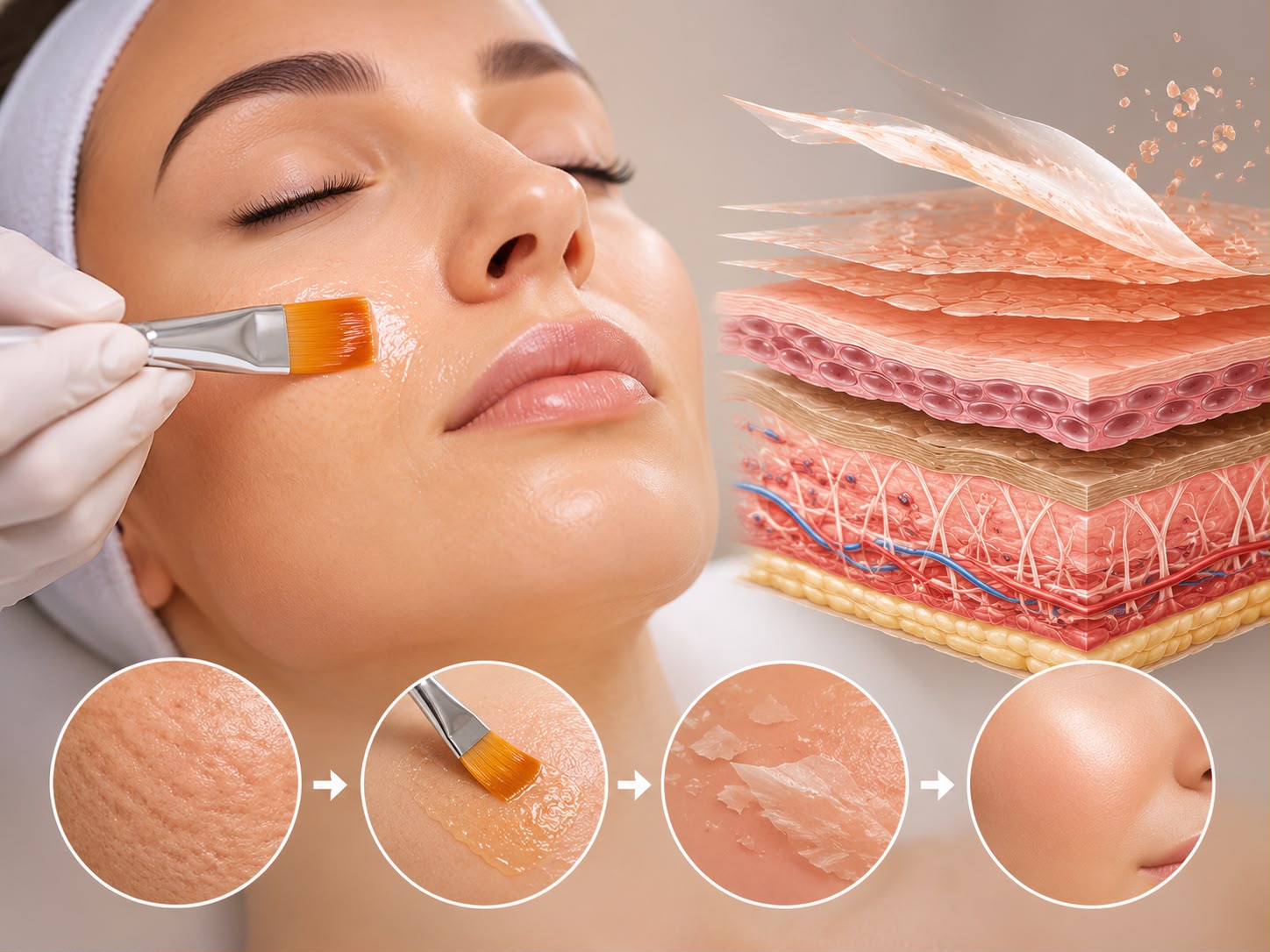
A chemical peel speeds this up on purpose. Here’s the sequence:
- The acid solution is applied to clean, dry skin
- It loosens the bonds between dead skin cells (called desmosomes)
- This controlled exfoliation removes the damaged outer layer
- Your skin responds by triggering its natural healing process
- New, healthier skin cells rise to the surface over the following days
So, in short, a peel doesn’t add anything artificial. Instead, it removes what’s damaged and lets your skin do the rest.
The Science: Acids and Skin Cell Turnover
Different acids work at different depths and speeds. That’s why not all peels feel or work the same.
- AHAs (like glycolic and lactic acid) are water-soluble and work mainly on the skin’s surface
- BHAs (like salicylic acid) are oil-soluble, so they penetrate into pores — useful for acne-prone skin
- TCA (trichloroacetic acid) works deeper, making it suitable for more visible pigmentation or texture concerns
Each acid type triggers the same basic process: controlled exfoliation, followed by renewal. However, the strength and depth vary by ingredient and concentration.
Peel Depth: Which Layers of Skin Are Affected
| Peel Depth | Skin Layer Reached | Typical Downtime |
| Superficial | Outer epidermis only | None to minimal |
| Medium | Deeper epidermis, upper dermis | A few days of visible peeling |
| Deep | Mid-dermis | One to two weeks, medically supervised |
At a skin clinic, superficial and medium peels are the most commonly used. That’s because they balance visible results with manageable downtime.
What Happens Immediately After a Chemical Peel?
Right after treatment, your skin may look pink or feel tight. That’s a normal part of the process, not a side effect to worry about.
- Day 1–2: Mild redness or a warm, tight sensation
- Day 2–5: Light flaking or peeling may begin, depending on peel depth
- Day 5–7: Fresh skin becomes visible underneath
- Weeks 2–4: Brighter tone and smoother texture become more noticeable
Because this is your skin’s own repair response, results continue to improve gently over the following weeks.
Why Skin Looks Better After a Peel
The improvement isn’t just about removing dead skin. A peel also triggers deeper changes:
- Increased collagen production, which improves firmness over time
- Faster, more even cell turnover, which reduces dullness
- Reduced pigment clumping, which fades sun spots and marks
- Unclogged pores, which helps control acne and blackheads
In other words, a single session starts the process. But consistent, repeated sessions build on it, layer by layer.
Types of Chemical Peels and How Each One Works
| Peel Type | How It Works | Best For |
| Glycolic Peel | Small molecule AHA, exfoliates surface cells quickly | Dullness, fine lines, mild pigmentation |
| Salicylic Peel | Oil-soluble BHA, penetrates into pores | Oily and acne-prone skin |
| Lactic Peel | Gentle AHA, also hydrates while exfoliating | Dry or sensitive skin |
| Mandelic Peel | Larger molecule, slower penetration | Acne-prone and sensitive skin types |
| TCA Peel | Penetrates deeper into the dermis | Visible pigmentation, deeper texture concerns |
Who Chemical Peels Work Best For
Chemical peels suit a wide range of skin concerns. However, the right type and strength always depend on your specific skin.
- Dull, uneven skin tone
- Mild to moderate acne and acne marks
- Fine lines and early signs of ageing
- Sun spots and pigmentation
- Clogged pores and rough texture
Peels work best on skin that can tolerate controlled exfoliation. So a proper skin assessment always comes before treatment, especially for active infections, very sensitive skin, or certain medications.
How the Skin Regulates the Healing Process
Your skin isn’t passive during a peel. Instead, it’s actively responding and healing throughout.
Because of this built-in repair system, professionally performed peels are generally safe and predictable. That said, going too strong, too soon, or without guidance can disrupt this natural process and cause irritation or uneven results.
For a clinical overview of how peels work and what to expect, Cleveland Clinic’s chemical peel guide offers a helpful, medically reviewed explanation.
Common Myths About How Chemical Peels Work
| Myth | Fact |
| Peels burn or damage your skin. | A professional peel is a controlled process, not an uncontrolled burn — the goal is renewal, not injury. |
| Visible peeling means it’s working. | Not all effective peels cause visible flaking. Some work beneath the surface with minimal peeling. |
| Stronger peels always give better results. | Stronger isn’t always better — it depends on your skin’s tolerance and your specific concern. |
| One session gives permanent results. | A single peel starts the process, but ongoing skin renewal and sessions build lasting improvement. |
| You can’t wear makeup or go outside after a peel. | Most superficial peels have minimal downtime, though sunscreen and gentle skincare are essential afterward. |
Aftercare: Supporting the Skin’s Natural Repair Process
Since a peel works by triggering renewal, your aftercare routine directly affects your results.
- Apply SPF 30 or higher daily, since new skin is more sun-sensitive
- Avoid picking or peeling flaking skin manually
- Use a gentle, fragrance-free cleanser and moisturiser
- Skip active ingredients like retinol for a few days post-peel
- Stay hydrated to support the skin’s repair process
Chemical Peels for Specific Skin Concerns
Chemical peels aren’t one-size-fits-all. They’re often chosen specifically to target concerns like acne, pigmentation, or dullness.
If breakouts are part of your concern, our guide on adult acne causes and treatment explains how peels fit into a broader acne treatment plan.
Frequently Asked Questions
Does a chemical peel hurt?
Most people feel mild tingling, warmth, or a slight stinging sensation, rather than real pain. Sensation varies with peel strength.
How long until I see results?
Superficial peels often show a glow within days. However, deeper concerns like pigmentation may need several sessions for visible change.
Can chemical peels change my skin’s structure permanently?
Individual sessions don’t create permanent structural change. Instead, consistent sessions build cumulative improvement over time.
Is peeling skin necessary for a peel to work?
No. Some effective peels work beneath the surface without visible flaking, especially milder formulations.
How often can I get a chemical peel?
This depends on peel type and your skin’s response. A professional will recommend a schedule based on your specific treatment plan.
Can chemical peels help acne scars?
They can improve mild scarring and post-acne marks. Deeper scars usually need additional treatments alongside peels.
Final Thoughts
Understanding how chemical peels work makes the process feel far less intimidating. It’s simply a controlled, science-backed way of speeding up what your skin already knows how to do.
With the right peel type, strength, and aftercare, this natural renewal process becomes a reliable path to brighter, smoother skin.
Book Your Chemical Peel Consultation Today
If you’re curious which chemical peel suits your skin, the team at Dr. Pankti’s REVIVE Skin, Aesthetic, Laser & Hair Clinic in Borivali can assess your skin and recommend the right option.
Clinic: Dr. Pankti’s REVIVE Multispeciality Clinics
Location: Borivali, Mumbai, Maharashtra
Call: 9619758202